

🌍 Frontier Markets News, April 17th 2026
A weekly review of key news from global growth markets

Africa
Gabon’s Dollar Bonds Slide as IMF Debt Worries Deepen
Gabon’s 2031 international bonds slumped by nearly three cents this week after the IMF said the country is facing worse budget pressures than expected, Bloomberg reports. The fund now projects a deficit of 10% this year, 11.2% in 2027, and 12% in 2028, causing debt to GDP to climb to 86% this year.
The projection is well above the CEMAC regional ceiling of 70%, while a 3% slide in oil output, driven by structural underinvestment, continues to squeeze an economy that relies on oil for 40-50% of government receipts.
- Mozambique seeks new IMF program after early debt repayment (Club of Mozambique)
A recent surge in oil prices, as well as a $1 billion oil prepayment deal the country cut with Trafigura this week, could offer some budget relief.
Gabon formally requested an IMF program in March to support its reform agenda, and talks on the contours of a deal continued during this week’s IMF Spring Meetings in Washington, DC. A deal is currently targeted for May 2026.
Botswana courts Oman as diamond woes deepen
Botswana, the world’s largest diamond producer by value, signed energy, mining, and infrastructure deals with Oman this week as part of its bid to diversify its economy, Al-Monitor reports. The deals include development of a 500-megawatt solar photovoltaic plant with battery storage, a joint exploration agreement covering copper, gold, graphite and iron ore, and a deal for petroleum storage facilities.
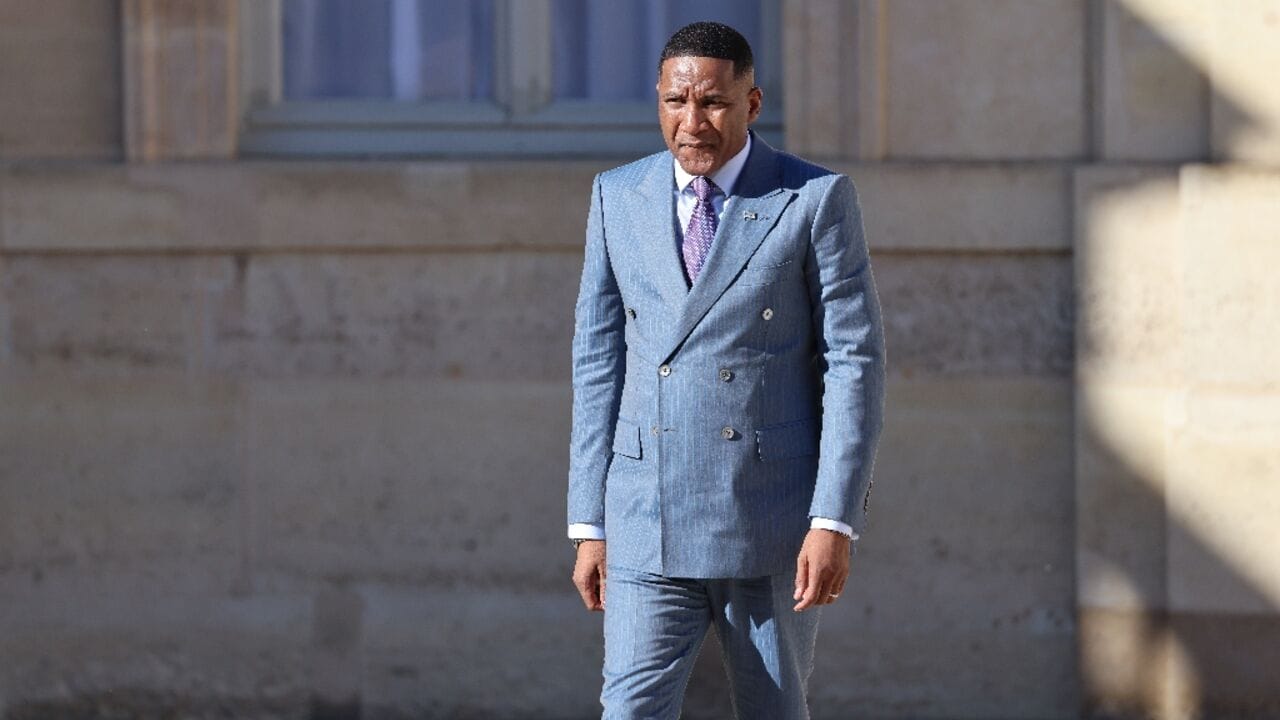
The solar project is the first to reach the implementation stage under a broader 3,000 MW energy cooperation framework agreed between the two nations in November 2025, and is expected to double Botswana’s effective generating capacity.
Diamonds account for roughly a third of Botswana’s GDP, but revenues have slumped due to weak prices and rising competition from lab-grown stones—pressures severe enough that S&P downgraded Botswana’s sovereign credit rating in March. Anglo American took a $2.3 billion write-down on its investment in De Beers earlier this year after similar impairments in 2024 and 2025, leaving the unit valued at just $2.3 billion.
Incumbent parties maintain grip in Djibouti and Benin
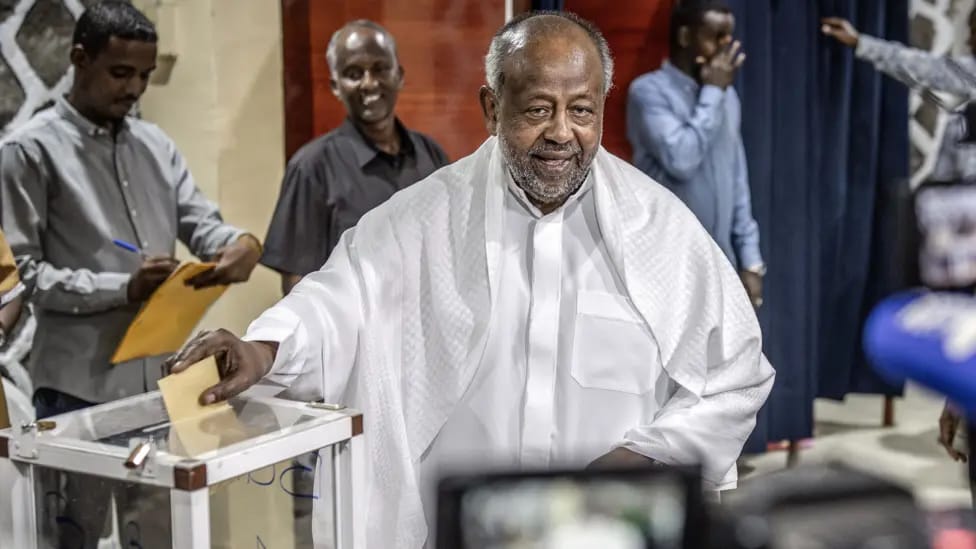
Djibouti’s longtime President Ismail Omar Guelleh secured a sixth consecutive term with 97.81% of the vote, with his sole opponent earning just 2.19%. Most opposition parties boycotted the election, while Guelleh, who was originally barred from running due to a constitutional age limit of 75, benefitted from a 2025 amendment lifting the limit and clearing his path to reelection.
In Benin, finance minister Romuald Wadagni won the presidential election with over 94% of the vote, Al Jazeera reports. The country’s governing coalition held every parliamentary seat after the main opposition party, the Democrats, failed to clear the threshold required to enter the National Assembly and was unable to run a candidate for president.
Wadagni was endorsed by outgoing president Patrice Talon, who was barred from running due to a term limit.
Meanwhile, Somalia lurched toward a political crisis. The four-year term of Somalia’s 11th parliament expired Tuesday, and lawmakers failed to elect a new president before the deadline. The government is pushing forward with a one-year extension of its mandate following constitutional amendments passed last month, a move rejected by opposition groups. President Hassan Sheikh Mohamud’s own tenure expires on May 15.
Asia
Pakistan seeks to build on Middle East peacemaker role
Pakistan’s Prime Minister Shehbaz Sharif is visiting Saudi Arabia, Qatar and Turkey this week as he seeks to rally momentum for peace talks that would end the US and Israeli war with Iran.
Iran has battered the Gulf during the conflict. As Sharif toured the region, Pakistani military chief Asim Munir, who has developed a close relationship with US President Donald Trump, visited Tehran.
- Saudi Arabia backstops Pakistan with $3 billion as UAE debt looms (Reuters)
Pakistan is seeking to reassert itself as a mediator after earlier talks that it held between the US and Iran failed to produce a peace agreement. A spokesman for Pakistan’s foreign ministry said on Thursday that a second round is expected to take place in Islamabad, the New York Times reports. However, he did not provide a date and neither the US nor Iran has confirmed that talks will take place.
Foreign investors flee Thailand
International investors sold more Thai assets in March than any month since October 2024, Reuters reports. Stock outflows reached $823 million, while bond outflows were $705 million.
The sell-off reflects fears that the war in Iran will undermine Thailand’s economy. Thailand buys about half its oil and gas from the Middle East, creating concerns that the war-wrought energy crisis will force Thailand to go over its self-imposed debt ceiling of 70% of GDP.
The outflows come just as investors were beginning to project confidence about Thailand. Combined inflows in February measured almost $1.6 billion, after Prime Minister Anutin Charnvirakul’s reelection raised hopes of political stability and economic reforms. If the Iran conflict drags on, though, Anutin may be forced to scale back his planned reforms in favor of emergency spending.
Cambodia diversifies support for deep-water port expansion
Cambodia is calling on Japan to help it complete a seven-fold expansion of Sihanoukville Port in the country’s southwest, Nikkei reports. The port is the only one in Cambodia that can handle large ships.
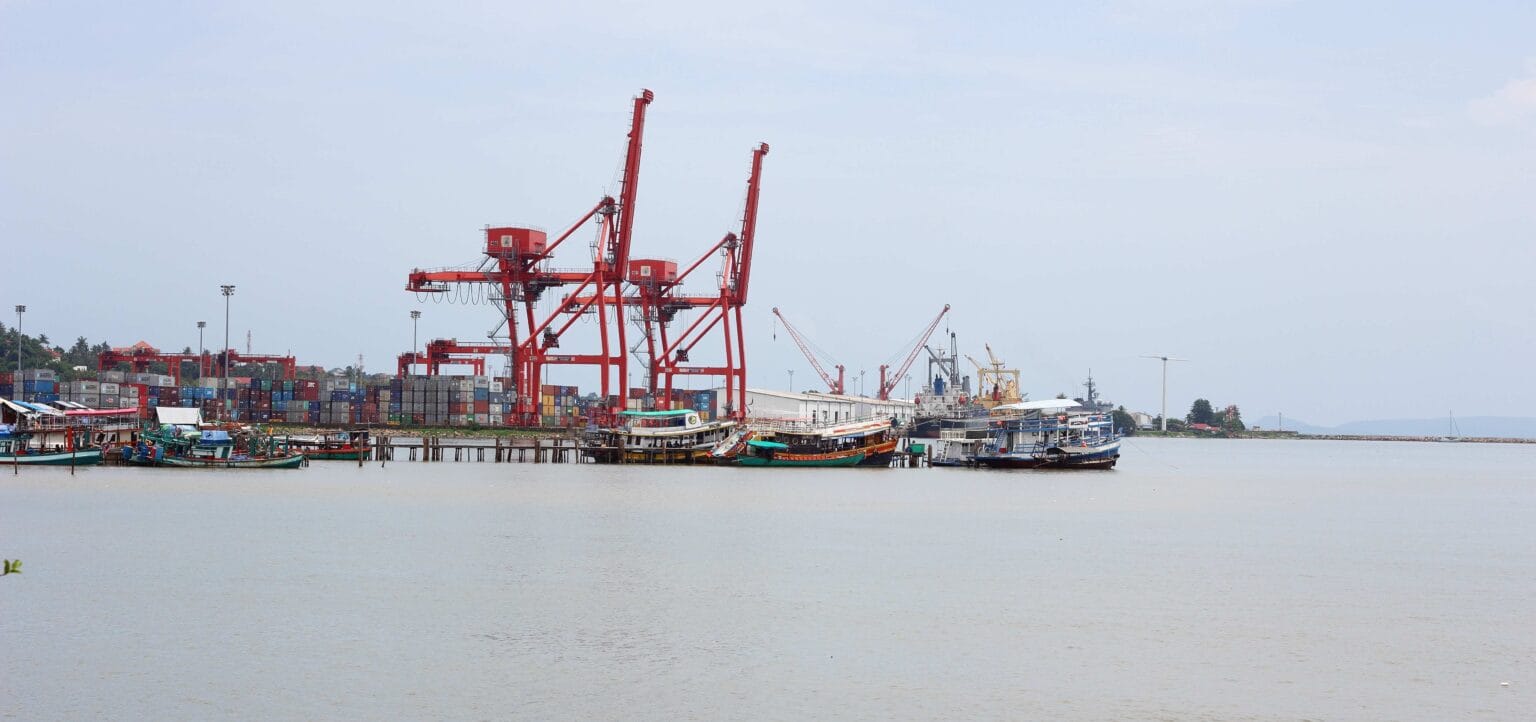
Toa, a Japanese construction firm, is currently building a new terminal there that is expected to be done next year. Japan provided about $250 million in yen-denominated loans for the project in 2022 and last month its foreign ministry committed to continuing to support the project, Nova.news reports.
- Russian Pacific fleet detachment pays unofficial visit to Sihanoukville (Russian foreign ministry)
- Cruise ship arrival at Sihanoukville highlights Cambodia’s tourism push (TheTraveler)
The port is about 15 miles from the Ream Naval Base, a China-built military port that some American officials described as concerning. But Cambodia has grown closer to the US under the Trump administration, with the two countries signing a trade deal last October. In January, a US warship docked at Ream Naval Base for the first time.
Middle East
Syria lays out economic reconstruction plan
Syria’s finance ministry this week hosted an inaugural “Friends of Syria Group” meeting on the sidelines of the annual IMF/World Bank meetings in Washington, where it presented the government’s new framework for economic recovery and reconstruction, Sana reports. The meeting focused on capacity building efforts to restore Syria’s governmental institutions, with a particular focus on public financial management, tax collection, and delivery of infrastructure projects.
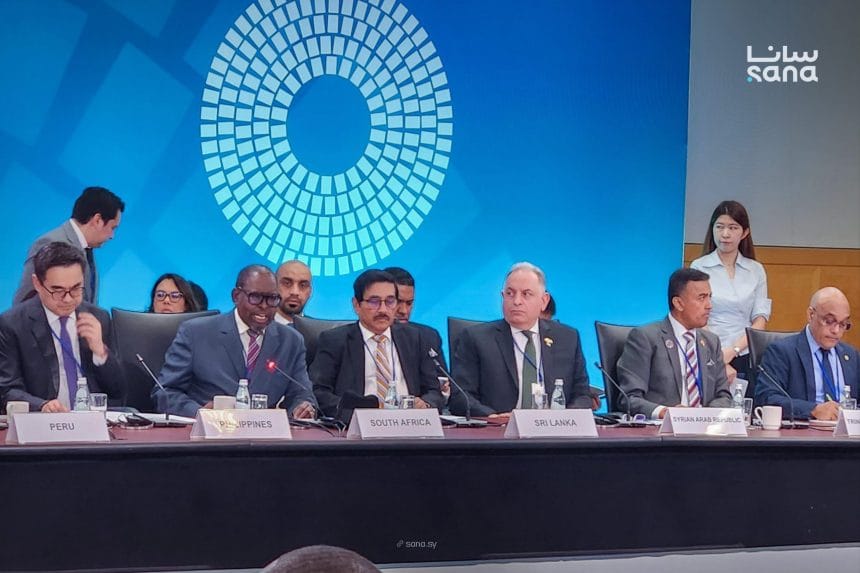
At the meeting, international partners including the Saudi Fund for Development, the European Commission, and the Islamic Development Bank promised to provide financial and technical support for the proposed programs.
Also this week, it emerged that Norway is lifting a ban on its sovereign wealth fund—the largest in Europe—investing in Syrian government bonds, Reuters reports. The move is expected to allow the fund, which has a 26.5% allocation to fixed income, to eventually support Syria’s public sector fundraising efforts, although for now it is largely a symbolic show of support.
IMF and Lebanon in discussions on emergency financing package
Lebanon and multilateral lender the IMF are struggling to agree on a reform strategy that will address the yawning gap in the country’s finances and the need for reconstruction in the wake of the war between Israel and Hezbollah. At meetings this week in Washington DC the two sides discussed an emergency financing package of $800 million to $1 billion to address the country’s growing humanitarian crisis, Reuters reports.
FMN has been in attendance at the meetings and can confirm that recent talks between the Fund and Lebanese officials were “mostly focused on crisis management” as authorities continue to show “resistance” to considering more fundamental economic reforms.
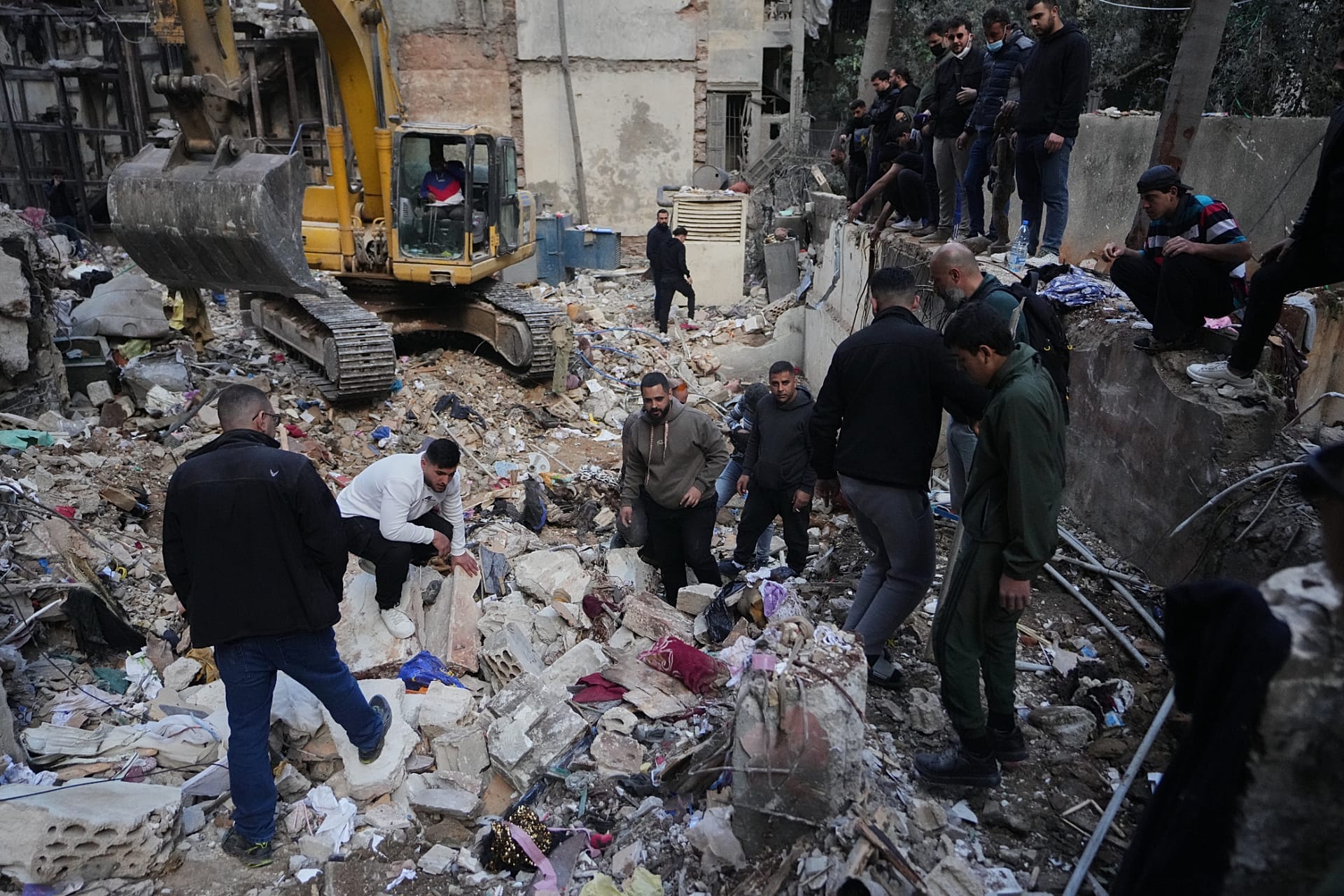
IMF authorities have said that Lebanese officials are asking for additional emergency financing to address the displacement crisis due to the ongoing war, but that they are hesitant to utilize their gold reserves or cut public sector salaries to meet the growing costs. According to the IMF, some $500 million in the budget earmarked for war reconstruction might be appropriated to meet budget shortfalls due to the war, and Lebanese officials are holding-off on a planned public-sector wage hike as well.
- Israel agrees to 10-day ceasefire in Lebanon (WaPo)
Sources told FMN that Lebanon and the IMF still can’t agree on a plan to reform the country’s banking sector, with the Fund claiming “fundamental changes” are needed. IMF authorities also reiterated their belief that Lebanon needs significant grant funding, and will need regional partners such as Saudi Arabia and Qatar to help fund reconstruction efforts.
Europe
‘Interference’ in spotlight as Bulgarians head to the polls
Former Bulgarian President Rumen Radev is expected to win this weekend’s parliamentary election after a campaign centered on fighting corruption and improving relations with Russia, Euronews reports. The vote, scheduled for this Sunday April 19th, will be Bulgaria’s eighth general election in five years.
Bulgarian governments have repeatedly collapsed after being unable to sustain coalitions in parliament, but most recently the government resigned in response to massive protests against an unpopular proposed budget.

Independent researchers say Bulgaria has ”one of the most permissive information environments for non-democratic malign manipulation in the EU.” So far, authorities have rounded up 200 vote buyers, and have set up defenses for online disinformation campaigns with support from the EU. Bulgarian journalist Christo Grozev, known for his work at investigative outfit Bellingcat, helped advise on efforts to counter potential interference.
Hopes high for reform in Hungary after Orbán election rout
Opposition leader Peter Magyar won a crushing victory over former Prime Minister Viktor Orbán’s Fidesz party in Hungary’s April 12 election, with his Tisza party snagging 54% of the vote against Fidesz’s 38%. Tisza emerged with a two-thirds parliamentary supermajority, enough to give it the option to change Hungary’s constitution, CRF reports.
Magyar has pledged to join the EU’s anti-corruption prosecution body (EPPO), review public contracts awarded under Orbán, restore judicial independence, and release the €90 billion Ukraine aid package Orbán had blocked.
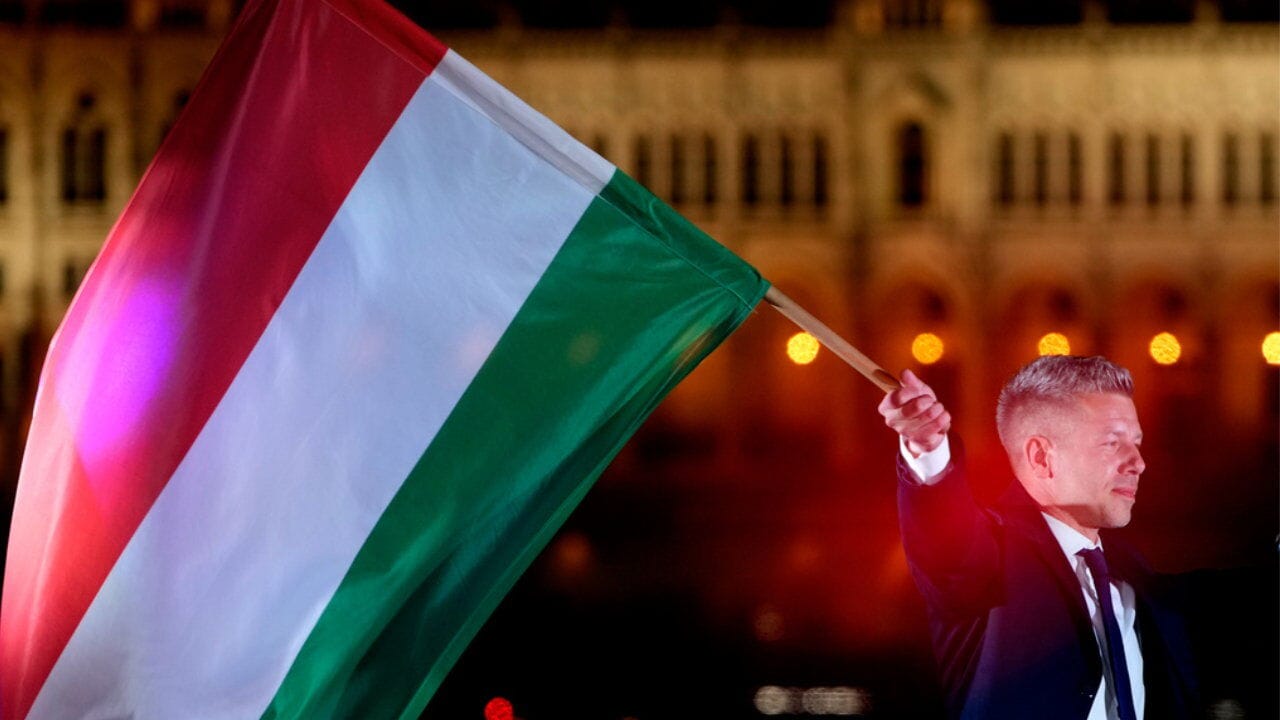
The election result helped prompt a rally in Hungarian assets: the forint strengthened 3% on Monday and Budapest’s benchmark stock index rose almost 4%, with analysts at UBS estimating that a release of frozen EU funds could add up to a percentage point to GDP growth by 2027.
Magyar does have some similarities to his predecessor, and some analysts wonder how much his government’s handling of certain issues will differ from Orbán’s. On Monday, Magyar voiced caution in sanctioning Russian oil and allowing Ukraine to join the EU, the Guardian writes.
What We’re Reading
Why the share of bad loans in Kenya is quietly rising (FiA)
Rwanda raises $251mn in first World Bank dual-guarantee deal (FiA)
Zambia takes $200mn hit to counter Iran war fuel shock (Bloomberg)
KoBold says DRC lithium exploration campaign ‘world’s biggest’ (Bloomberg)
TotalEnergies discovers hydrocarbons in Republic of Congo near existing production facilities (Reuters)
Libya approves first unified budget in more than a decade (Al Jazeera)
Morocco emerges as Africa’s drone hub as France’s manufacturer expands operations (Africa Business Insider)
Indonesia doubles capital requirement for securities firms (Reuters)
Philippines plans more transport subsidies in response to Iran war fallout (Nikkei)
Philippines seeks US permission to buy Russian oil (Reuters)
Nepal’s new government to probe assets of former officials (Kathmandu Post)
Gulf states turn to private deals in $10bn wartime borrowing spree (FT)
Saudi wealth fund sets new strategy to build global champions (Bloomberg)
Argentina in talks for $2bn loan backed by World Bank (Bloomberg)
Colombia's Petro walks back 100% tariffs on Ecuadorean goods (Reuters)
China told Maersk and MSC to drop Panama port operations (FT)
Leftist Sanchez in line for Peru runoff as vote count goes down to the wire (Reuters)
Chile's Kast unveils slew of reforms including corporate tax rate cut (Reuters)
We are committed to providing FMN readers with a free weekly digest of politically unbiased, succinct and clear news and information from frontier and small emerging markets.
Please consider becoming a paid supporter to help cover some of our costs and support our continued development of sharp markets-focused coverage and new informational products. Paid subscribers will also gain exclusive access to our quarterly EM/FM report that aggregates EM insights from dozens of major banks, international institutions and consultancies.

Read next


