

🌍 Frontier Markets News, May 8th 2026
A weekly review of key news from global growth markets

Africa
Mozambique weighs shift to yuan as economy weakens
Mozambique is considering converting the $1.4 billion it owes China into renminbi loans, a potential restructuring with its biggest bilateral creditor that could reduce the cost of servicing its debts, Business Insider reports.
The discussions come as Mozambique faces a deepening liquidity crunch. The IMF and World Bank have warned the government’s debt is unsustainable, with payment arrears rising, while ratings firm Fitch cut the country’s credit rating last month and said a default was probable. The economy contracted an estimated 0.5% last year and its currency has weakened against the dollar this year.
- Mozambique LNG project hits 42% completion after force majeure lifted (The Hindu)
If it goes ahead with the debt conversion, Mozambique would join other African nations deploying similar strategies. Kenya converted three Exim Bank of China loans originally totaling $5 billion into renminbi last year. Ethiopia is considering a similar deal and Zambia has discussed a currency swap after accepting some mining taxes in yuan.
Malawi fuel crunch spills into prices and public services
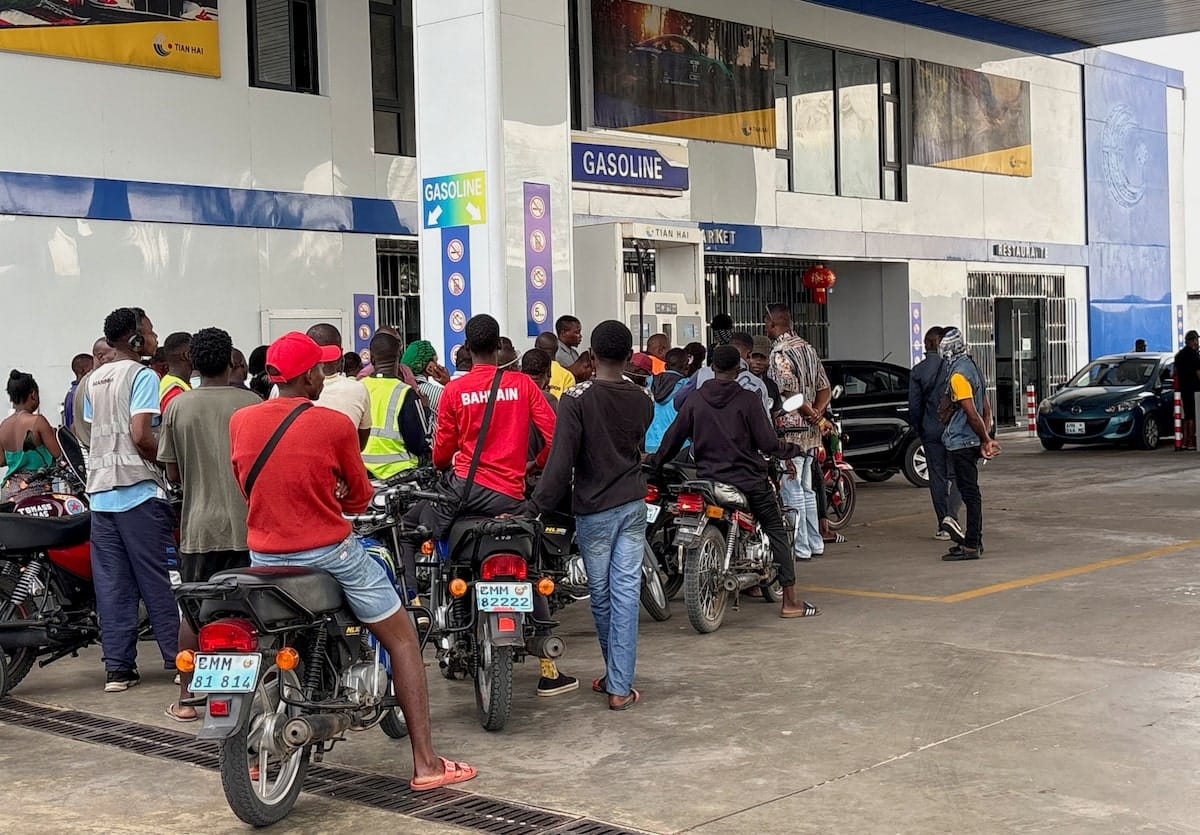
Malawi’s fuel crisis is deepening, with dry filling stations and long queues spreading across the capital Lilongwe and other parts of the country as a continued foreign currency shortage restricts fuel imports, DW reports.
Reuters reported in February that crippling dollar shortages had already disrupted imports of fuel, fertilizer and other essentials, while reserves remained below the three months of import cover typically viewed as a minimum buffer. The government reportedly sold more than half a ton of locally sourced gold to help pay for fuel imports, and is now considering a $120 million Afreximbank loan to buy fuel.
The squeeze is feeding directly into inflation and fiscal stress. Petrol costs about $3.83 a liter in Malawi, compared with $1.50 in neighboring Zambia, according to DW, and authorities raised fuel prices by an average 35% on April 1 as Middle East tensions pushed up global oil prices.
Asia
Thailand to borrow $12bn to ease Iran war crunch
Thailand’s cabinet approved an emergency decree that will pave the way for $12 billion in borrowing aimed at easing the impact of the Iran war, Prime Minister Anutin Charnvirakul said on Tuesday.
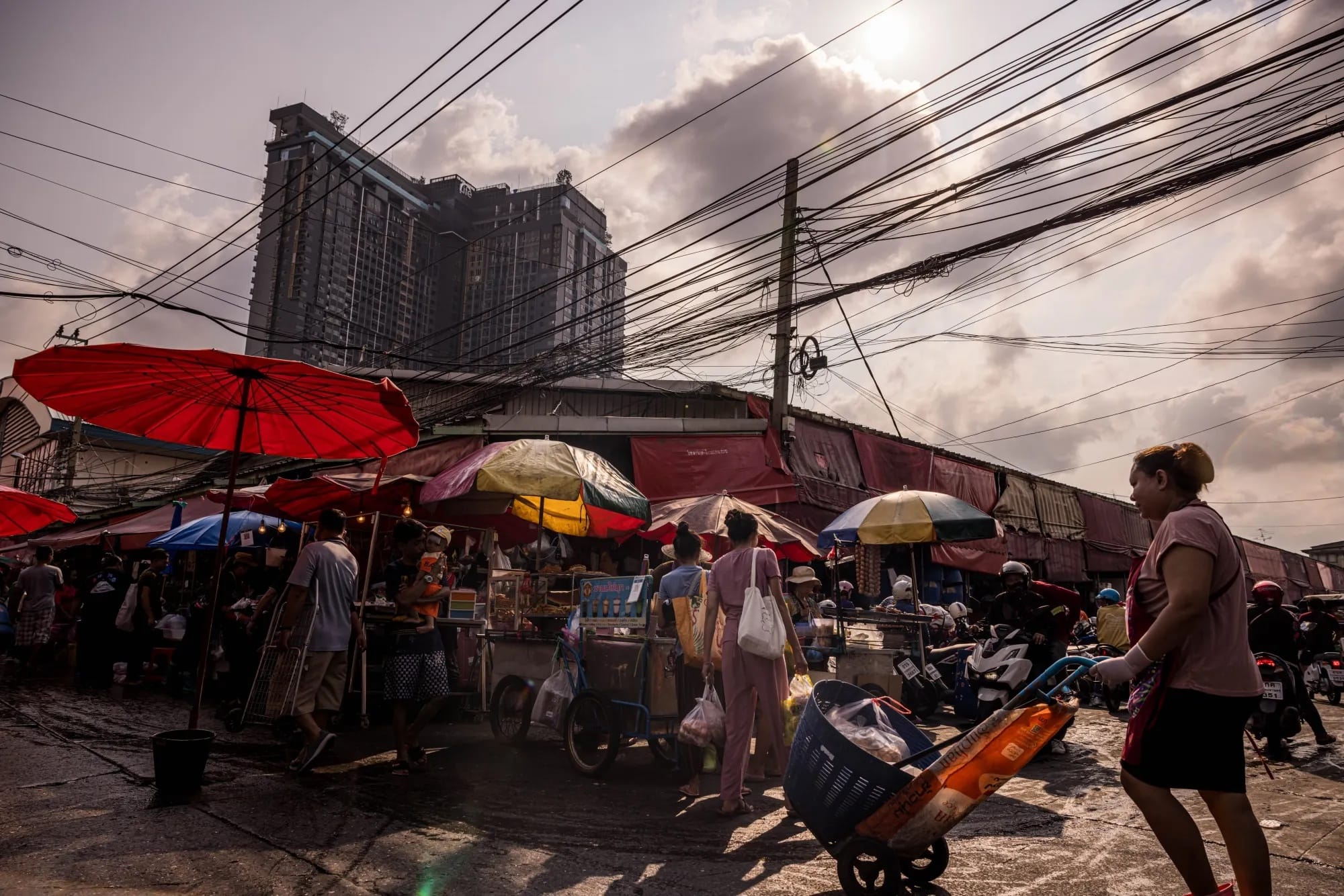
The government plans to use the money to reduce the cost of living and accelerate the country’s transition away from fossil fuels, Bloomberg reports. Thailand generates much of its energy from oil and gas imported from the Middle East, making it particularly vulnerable to the energy market reverberations of the closure of the Strait of Hormuz.
If the Thai parliament approves the plan, the government will raise funds from the domestic market. The measure is expected to go to parliament next week.
Myanmar junta ‘transfers Aung San Suu Kyi from jail’ to house arrest
Myanmar’s ruling military junta has moved former leader Aung San Suu Kyi from prison to house arrest, state media reported last week.
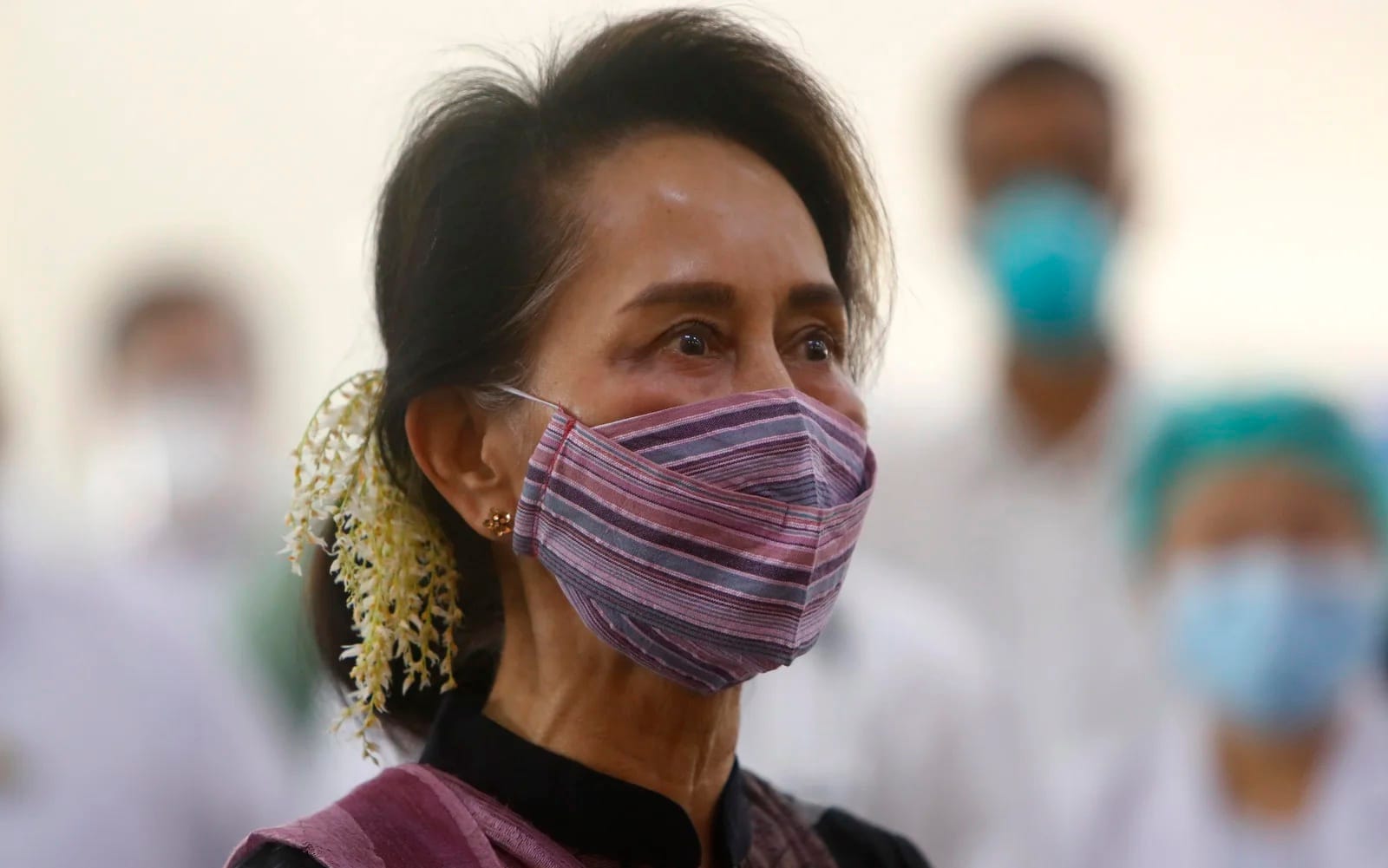
General Min Aung Hlaing, who is set to be inaugurated as president this month, gave the order to release her, NPR reports. But a spokesperson for Myanmar’s government in exile said Aung San Suu Kyi had not been returned to her home, and her son wrote on social media that she remained a “hostage.”
Myanmar’s civilian leadership collapsed in 2021 when the military took power in a coup. The putsch sparked a civil war that has resulted in around 93,000 casualties, according to estimates by conflict monitor ACLED.
Bangladesh looks to enhance relationship with China
Bangladesh’s foreign minister Khalilur Rahman visited Beijing this week for meetings that resulted in a pledge of stronger ties with China.
Bangladesh is attempting to cultivate new allies after a February election put to rest an interim period that followed the ouster of its former leader Sheikh Hasina in 2024. Chinese Foreign Minister Wang Yi voiced support for Bangladesh’s new government in meetings this week, state media outlet Xinhua reports.
In turn, Rahman said Bangladesh supports China’s claims over Taiwan, the self-governing island that Beijing claims as its own, according to a joint press release the two countries released on Wednesday.
Middle East
Saudi Arabia records largest budget deficit since 2018
Saudi Arabia’s budget deficit swelled to $33.5 billion for the first quarter of this year due to rising government spending and oil export losses arising from the US-Iran war, Al Jazeera reports. Oil revenues fell 3% despite higher prices—pressured by reduced export capacity—and spending increased by 20% as the government took emergency measures to cope with the war.

Riyadh had planned for a $16 billion total deficit in 2026, but the outbreak of war in the Gulf prompted the government to increase defense spending alone by more than $17 billion, the FT reports. Compared to other Gulf states, Saudi Arabia has better alternative export routes avoiding the Strait of Hormuz, but as buyers adapt to the supply shock, Saudi Aramco has had to lower its price premium by $4-$8, potentially reducing the scale of the windfall from surging oil prices, Bloomberg reports.
As the ceasefire between the US and Iran extends into May, non-oil sector growth in the kingdom has rebounded slightly. Domestic demand and government spending contributed to a slight rise in sentiment among purchasing managers, Reuters reports.
US-Iran War slows GCC construction boom
Construction activity in the Gulf region is slowing sharply, with awarded projects falling from 84 in January and 80 in February to just 25 in March—a drop in value from $26 billion to just $11.8 billion—Semafor reports.
In Saudi Arabia, which accounts for nearly half the Gulf Cooperation Council’s $2 trillion planned construction pipeline, contract awards fell 51% in terms of value over the first quarter of this year. Analysts expect spending on the megaprojects that have helped drive the market to ebb further.
The changing outlook is being reflected in how Saudi Arabia markets its flagship gigaprojects. Neom, initially touted as a world-leading tourism and residential real estate development, is now reportedly pivoting to become a logistics and trade hub, as the ports built for its construction are now being repurposed to support an alternative to the blockaded Strait of Hormuz, the FT reports.
Europe
Disparate parties join forces to oust PM in Romania
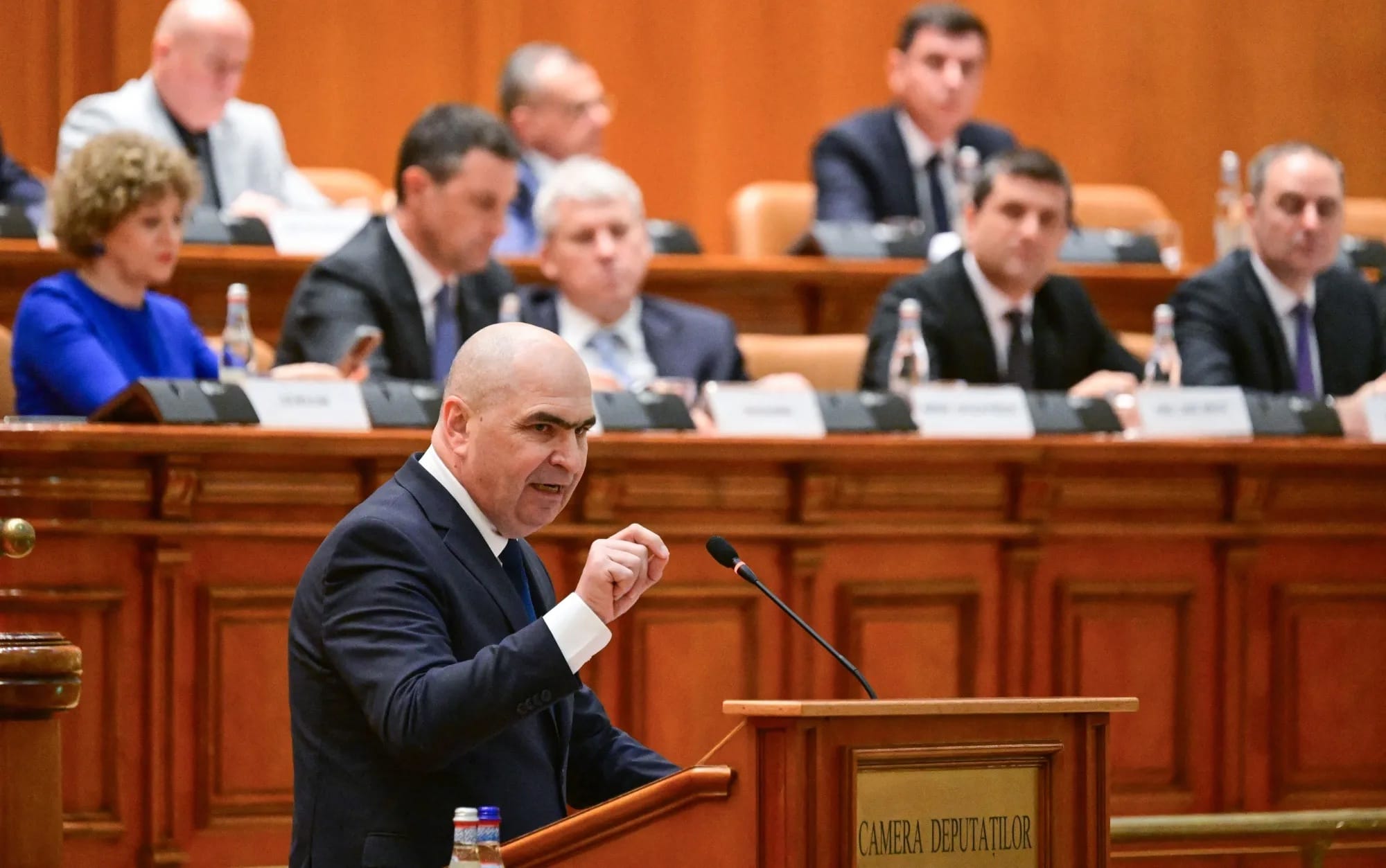
Romania’s far-right Alliance for the Union of Romanians party teamed up with the left-of-center Social Democratic Party (PSD) to secure a vote of no confidence in Prime Minister Ilie Bolojan, the FT reports. The PSD’s alignment with the Union of Romanians enhances the credibility of a party that many Romanians and Europeans see as right-wing extremists, according to Politico.
- Romania cracks down on gambling business after ‘unchecked expansion’ (Balkan Insight)
Bolojan’s ouster extends Romania’s recent period of political upheaval and brings new challenges to the country’s management of soaring inflation and Europe’s largest budget deficit, which hit 7.7% of GDP in 2025.
PSD’s alliance with the Union of Romanians was driven by their mutual opposition to Bolojan’s austerity measures, which analysts see as essential to getting Romania’s public finances in order. If reforms are not enacted by August, Romania risks losing €11 billion in EU funding, potentially threatening the country’s credit rating. 10-year local government bond rates have risen nearly 60 basis points so far this year to 7.29%, the highest in the EU.
Czech government seeks to exempt infrastructure investment from fiscal rules
The Czech government is proposing to exempt some infrastructure spending from fiscal calculations to make it easier to lower the country’s deficit from this year’s forecast of 2.6% to 0.9% of GDP, the level required by current fiscal rules. The proposal would also allow the government to increase spending by 10% above its budget if a “security emergency” necessitates it.
- Czechs pack Prague’s Old Town Square to protest against government media plans (Reuters)
The Czech Republic has one of the highest credit ratings in the eastern EU, scoring above France with an AA- from ratings firm S&P. The government defended the proposed infrastructure exemptions, noting they mirror Germany’s, which also excludes some government investments from fiscal rules.
Armenia intensifies effort to tighten ties with EU
At the first-ever Armenia-EU bilateral summit in Yerevan this week, EU leaders commended the country’s sustained peace with Azerbaijan, recommended the country normalize relations with Turkey, and indicated openness to extending EU funding and investment in the country.
- Turkey and Armenia agree to restore medieval bridge in normalization push (Al-Monitor)
Armenia’s turn toward the EU was spurred by concerns that its long-term ally Russia is no longer able or willing to sustain support for it. In 2023, Russian forces established a ceasefire instead of defending Armenia’s control of the contested Nagorno-Karabakh region, when Azerbaijani forces took the territory by force. Since then, Yerevan has increased alignment with the EU, which is expected to deliver investments of €2.5 billion in coming years. Last year, Armenia formally declared its intention to join the EU.
Latin America
Ecuador taps global bond market amid oil windfall
Ecuador sold $1 billion more of the dollar bonds it first sold in January, capitalizing on higher oil prices and sustained investor appetite for emerging-market debt, Bloomberg reports. The notes due in 2034 and 2039 priced at 8.25% and 8.75%, respectively, signaling strong market access for the administration of President Daniel Noboa.

The issuance comes as Ecuador benefits from a surge in global crude oil prices, which provides a critical fiscal buffer for the dollarized economy. The government is leveraging this window of favorable macroeconomic conditions to pre-fund its budget and manage its maturity profile, demonstrating confidence in its ability to navigate international capital markets.
- Ecuador lowers Colombia tariffs after call from far-right presidential candidate (Colombia Reports)
The successful bond issuance underscores a broader trend of frontier- and emerging-market sovereigns moving quickly to secure financing while global conditions remain supportive, particularly for commodity exporters experiencing positive terms-of-trade shocks.
Cuba’s economy forecast to contract 7% in 2026
The IMF and Economist Intelligence Unit both forecast a 7.2% GDP contraction for Cuba in 2026, nearly double the 3.8% decline in 2025. The severe economic slowdown follows a reduction of economic support from the US and warnings from the Trump administration that Cuba will receive no more oil or money from Venezuela, prompting President Miguel Díaz-Canel to acknowledge the loss of approximately 20% of GDP in just 72 days.

The economic collapse has led to widespread shortages of food, medicine, and fuel, with power outages now exceeding 20 hours a day across most of the country. The Trump administration has imposed more than 240 sanctions against the regime since January 2025, intercepted at least seven oil tankers, and reduced Cuban energy imports by between 80% and 90%.
The regime’s response has followed its oldest reflex. Diaz-Canel described the situation as “a dangerous and unprecedented escalation” while proclaiming that “no aggressor will find surrender.” Analysts have drawn parallels with Venezuela, where a similar pattern of cumulative US pressure ultimately ended then-President Nicolás Maduro’s presidency.
Guatemala appoints new attorney general, ending institutional conflict
Guatemalan President Bernardo Arévalo appointed Gabriel Estuardo García Luna as the new attorney general, putting an end to a fierce, years-long struggle with former top prosecutor Consuelo Porras. García Luna, a former judge and university professor, will assume the position on May 17, marking a significant victory for the progressive president’s anti-corruption agenda.
Porras, who had been sanctioned by the US, the EU, and more than 40 countries for obstructing anti-corruption efforts and attempting to interfere with the 2023 presidential election, failed to secure enough votes from the nominating commission for a third term. Her departure removes a major institutional roadblock for the Arévalo administration, which had faced continuous judicial investigations aimed at dismantling its political party, Semilla.
The transition may open the door to reopening investigations into alleged corruption and obstruction of justice during Porras’s tenure, including a criminal complaint related to her alleged connection to a network of illegal adoptions of Indigenous children during the 1980s.
What We’re Reading
Ghana secures US debt deal as Washington presses for prompt repayment of outstanding obligations (Business Insider Africa)
Nigeria supplies less than half of allocated crude to refineries in early 2026 (Reuters)
Nigeria LNG to keep all cooking gas supply for local market (Ecofin Agency)
Rebels in Mali capture military drone control station (France24)
Delays mount on Cameroon-Gabon border road construction (Business in Cameroon)
Strike delays release of election results in Central African Republic (AfricaNews)
Kenya private sector activity ‘contracts for second month in a row’ (CNBC Africa)
Uganda parliament passes controversial ‘sovereignty bill’ after amendments (AfricaNews)
Algeria signs $1bn oil deal as North Africa races to secure bigger share of global energy market (Business Insider Africa)
Egypt introduces fertilizer export tax amid global market tensions (Ecofin)
Vietnam and Japan to increase cooperation over critical minerals and energy (Reuters)
Indonesia signs defense deal with Japan (The Diplomat)
Thailand scraps energy exploration deal with Cambodia (Reuters)
Kazakhstan says it will stop importing Russian electricity next year (Moscow Times)
Saudi Arabia and Kuwait cut US base and airspace access, forcing pause of Trump’s Project Freedom (MEE)
Conflict pushes Omani-Saudi border trade to record levels (AGBI)
China calls for end to Iran war and Hormuz to reopen during foreign minister Araghchi visit (Al Jazeera)
Jordan claims airstrikes on drug trade infrastructure tied to Druze leaders in Syria (Al Jazeera)
Hungary probes Orbán mogul for financial crimes (FT)
Poland’s Jarosław Kaczyński faces revolt in party he built (FT)
Moldova’s first spy swap rewrites region’s security playbook (Balkan Insight)
Costa Rica climbs in 2026 World Press Freedom Index to lead the Americas (Tico Times)
US cancels visas for board of Costa Rica newspaper critical of Trump ally (The Guardian)
Bolivia seeks $3bn tourism boost for struggling economy (Bloomberg)
Protests in Bolivia escalate amid economic turmoil and policy demands (Al Jazeera)
Guyana’s president warns of mineral ‘dependence’ as Iran war speeds shift from oil (Mining.com)
Guyana and Venezuela return to UN court to settle border dispute (AP)
Little changed in Venezuela in wake of US intervention (NY Times)
We are committed to providing FMN readers with a free weekly digest of politically unbiased, succinct and clear news and information from frontier and small emerging markets.
Please consider becoming a paid supporter to help cover some of our costs and support our continued development of sharp markets-focused coverage and new informational products. Paid subscribers will also gain exclusive access to our EM/FM reports that aggregate insights from dozens of major banks, international institutions and consultancies.

Read next


