

🌎 Frontier Markets News, October 2nd 2026
A weekly review of key news from global growth markets

Africa
Citi steps in to unstick Kenya’s debt-for-food swap
Citigroup is set to arrange Kenya’s $1 billion debt-for-food swap, a US-backed deal that would let the government refinance existing debt on cheaper terms and channel the savings into food programs, Bloomberg reports. The bank’s entry unlocks a transaction that had stalled for lack of a lead arranger, according to the report.
The swap, structured with the World Food Programme, is guaranteed by the US Development Finance Corp., which the Treasury says will let Kenya issue cheaper debt to retire a eurobond or other costly borrowing. President William Ruto announced the DFC’s agreement in Washington in December, and the Treasury had aimed to close by March. The deal is part of a $5.4 billion external financing plan for the year to June 2027.
- World Bank urges Kenya to cut power prices and stabilize tax regime (Bloomberg)
Also this week, mining cabinet secretary Hassan Joho said that talks with US officials on building refineries and processing plants in Kenya, partly to supply the American market, were at a “very advanced“ stage. He linked the talks to bidding for Mrima Hill, a niobium and rare earths deposit in Kwale County, where six firms from the US, Australia and China are competing.
Guinea-Bissau’s ousted president plans return for junta-run vote
Guinea-Bissau’s deposed president, Umaro Sissoco Embalo, plans to return home this weekend to run in the December presidential election, Reuters reports. Soldiers toppled him last November, a day before provisional results from national elections were due to be announced.
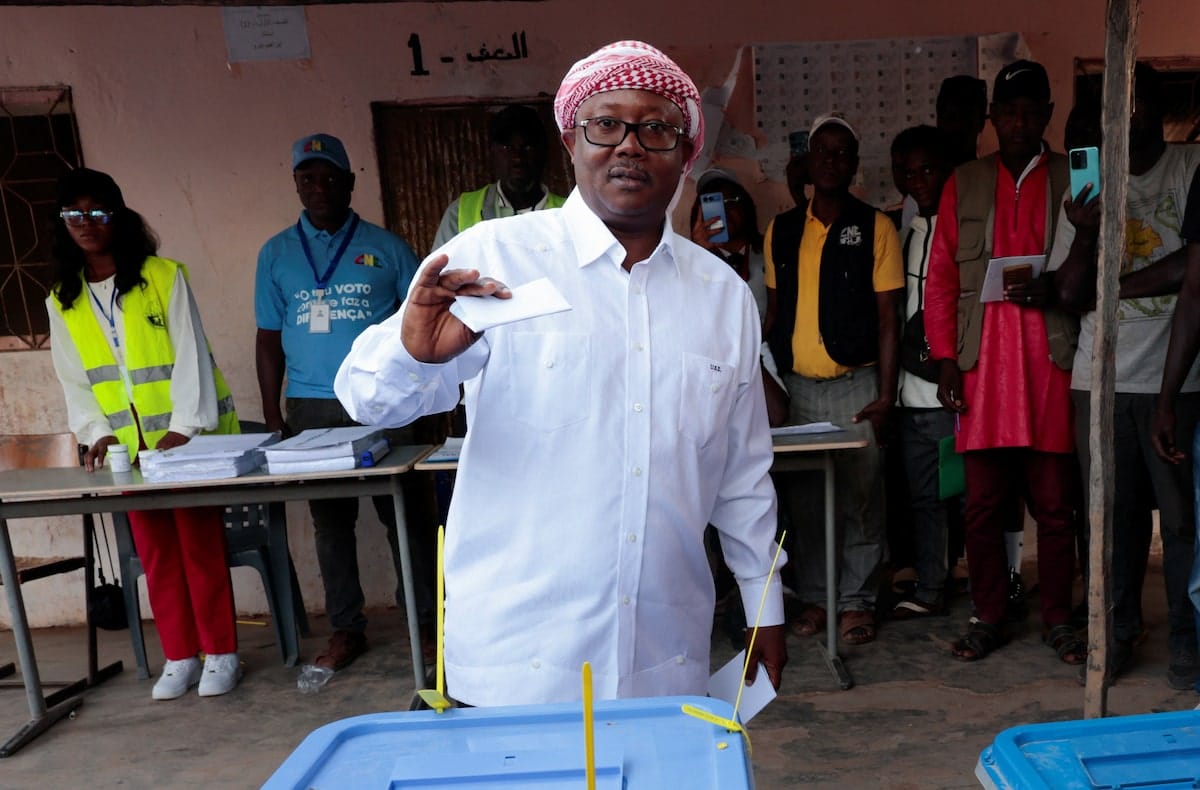
The junta installed General Horta N’Tam, a close Embalo associate, as transitional president under a charter that bars him from running. A constitution approved by referendum in August expands presidential powers and requires candidates to have lived continuously in the country for the preceding five years.
The junta has also moved to tighten controls on the opposition. Last week, after a deadline for political parties to move offices away from state buildings expired, security forces occupied the Bissau headquarters of the PAIGC party. The party’s leader, Domingos Simões Pereira, now based in Lisbon, accused the transitional government on Tuesday of trying to erase the opposition.
Morocco names first woman premier
Motocco’s King Mohammed VI on Tuesday named Fatima Ezzahra El Mansouri the country’s first female prime minister. He tasked the 50-year-old Marrakesh mayor with forming a government after her Authenticity and Modernity Party (PAM) won the most seats in last week’s election.
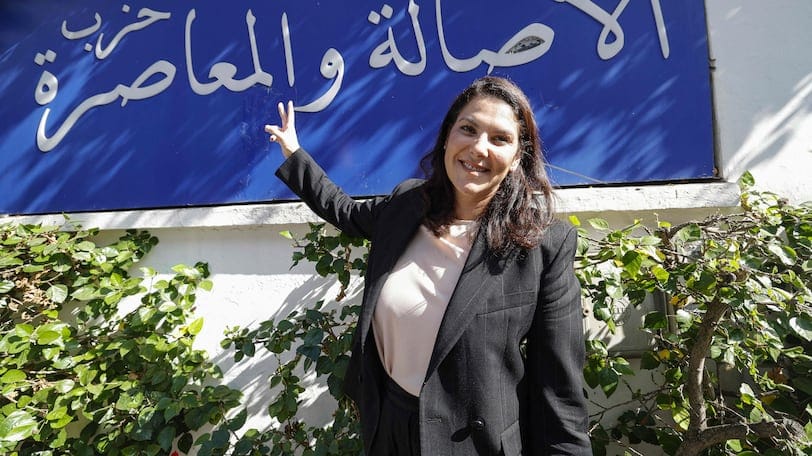
The PAM was founded in 2008 by Fouad Ali El Himma, now a royal adviser, as a counterweight to Morocco’s Islamist movement. El Mansouri, a founding member, heads its collective leadership and was housing minister in the outgoing government. The king keeps broad powers over major policy.
The PAM promised to roll out a 350 billion dirham ($37.1 billion) five-year program to create at least one million jobs, an income-tax exemption on salaries below 15,000 dirhams a month and 100,000 housing solutions for young people. The election was the first since last year’s youth-led protests, which began after maternal deaths at a public hospital in Agadir. The new government will oversee the final stage of a $20 billion push to prepare for the 2030 football World Cup.
Asia
Malaysia begins deporting refugees to Myanmar
Malaysia started sending back around 1,500 refugees from Myanmar this week, The Guardian reports, despite warnings from the UN and rights groups that they could face danger at home.
More than 1.5 million people have fled Myanmar in recent years as the country’s army fights a war with several rebel groups. Almost 200,000 have landed in Malaysia, according to the UN. The Malaysian government has described the influx as a financial burden that has triggered “serious social crises and tangible security threats,” Straits Times reports.
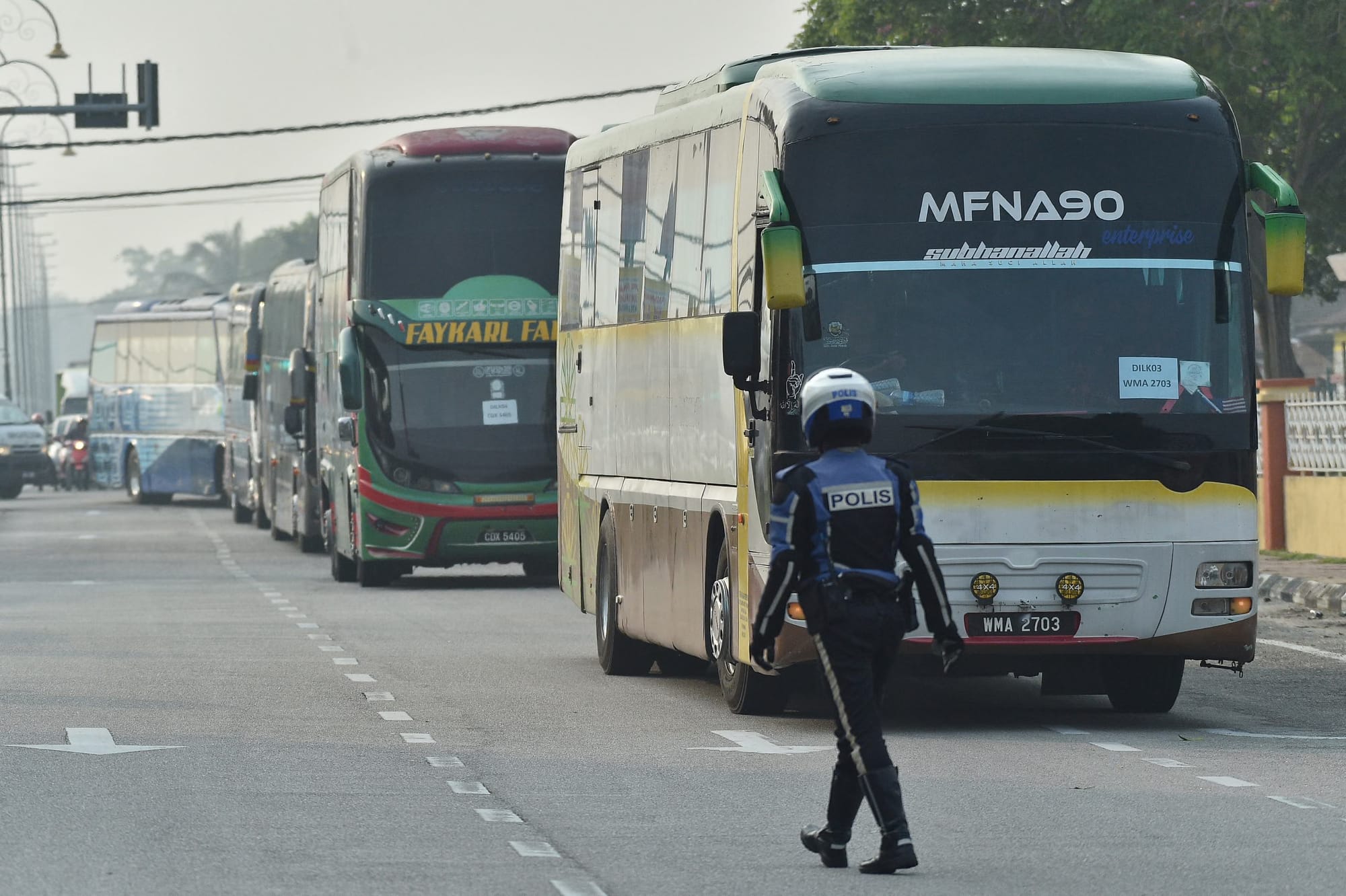
Malaysia last month offered to host Myanmar’s junta chief-turned-president in exchange for “voluntary” repatriation of 5,000 refugees. Myanmar’s president, Min Aung Hlaing, is seeking international recognition through a series of overseas visits. He reached a deal with Malaysia this week to visit in October, Reuters reports.
Pakistan offers support for Saudi Arabia in war against Houthis
Pakistan will use “whatever means are available” to defend Saudi Arabia against the Houthis in neighboring Yemen, the South Asian nation’s defense minister said on Tuesday.
Saudi Arabia has been fighting the Houthis since 2015. The conflict eased following a UN-brokered truce in 2022 but reignited this summer. The comments indicate that Pakistan could become involved in the regional conflict, AP reports, even as it fights its own war with Afghanistan.
Pakistan signed a defense deal with Saudi Arabia and Turkey last August. Saudi Arabia announced $8 billion in financial support for Pakistan nine months later.
Laos deepens military cooperation with China
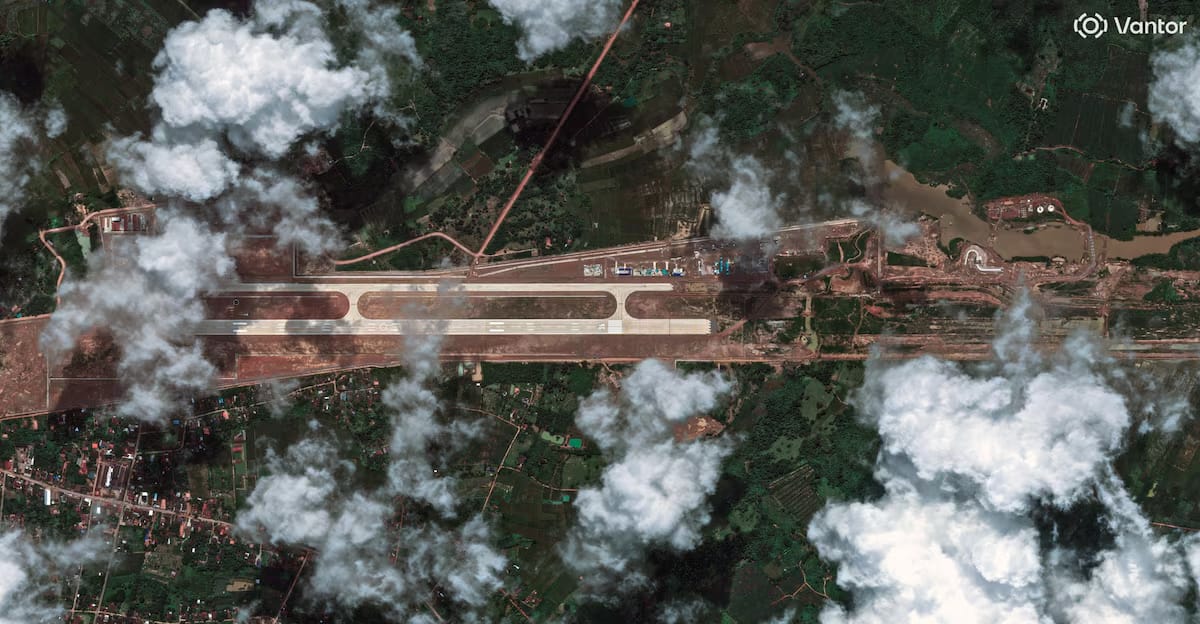
China has opened a new air force support base in Laos, the Chinese defense ministry announced on Tuesday.
The base will help the Laotian air force train pilots and will be jointly controlled by China and Laos, SCMP reports. It is China’s third overseas military base, following previous installations in Cambodia and Djibouti.
The base opens as Laos’ economic growth is slowing. Tourism and electricity exports helped Laos’ economy grow by 4.8% last year, according to the World Bank, but the bank warned that “the improvement remains fragile, with the country still highly vulnerable to external shocks.” It expects Laos’ growth to moderate to 3.8% this year due to high fuel import costs driven by the war in Iran.
Middle East
Syrian companies struggle to adjust to free-trade reforms
Major free-market trade reforms and the rapid removal of international sanctions in Syria have exposed local manufacturers to foreign competition for the first time, the FT reports. Local businesses are having to adapt to rapid liberalization after decades of protectionism and state capitalism under the Assad regime.
Subsidies and import restrictions favoring regime-aligned companies have been rolled back in recent months, paving the way for a glut of cheap imports from nearby Egypt. The government has responded to criticism by arguing that manufacturers who benefited from proximity to Assad “should get used to competition.”
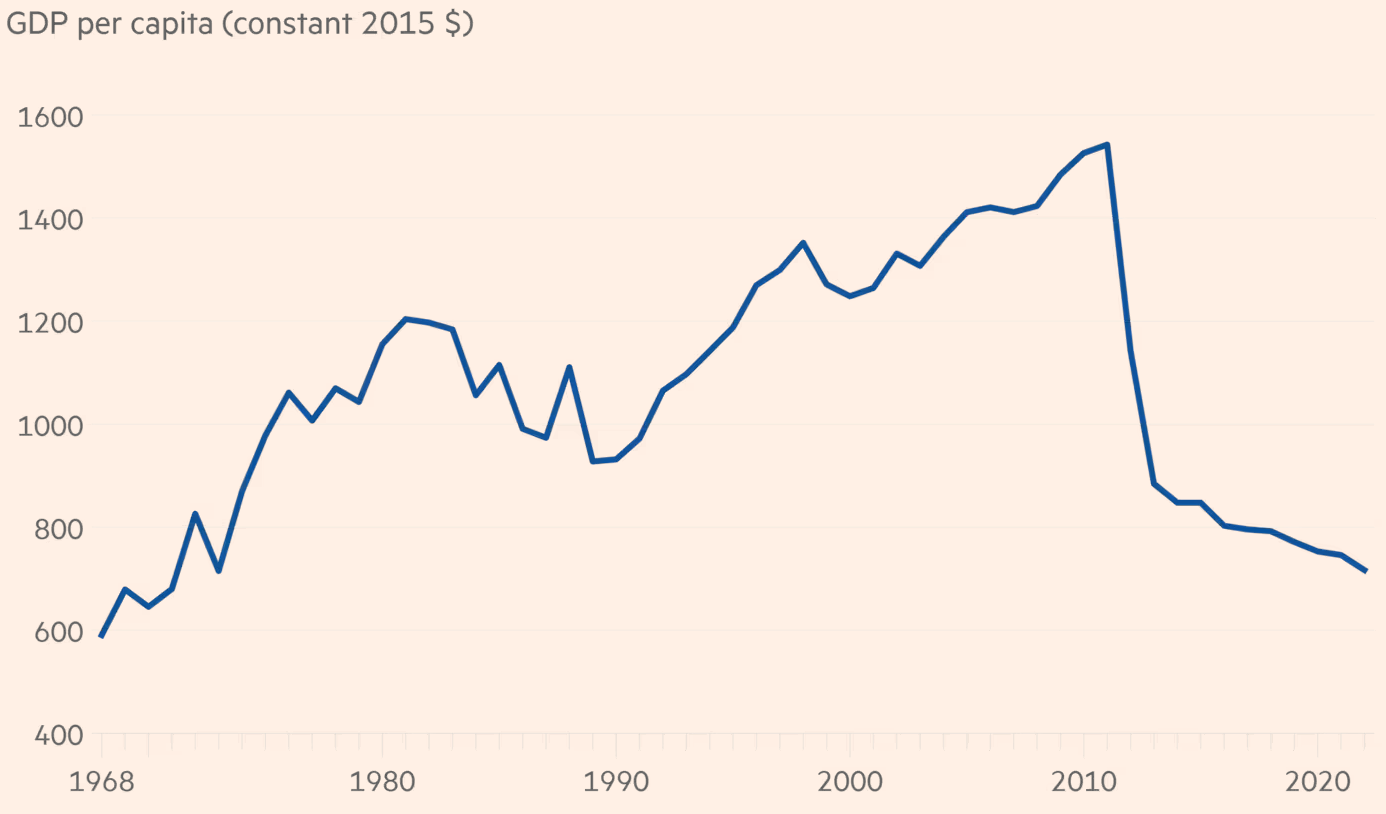
The IMF and World Bank forecast double-digit growth for Syria this year, but local economists suggest that most of the growth is driven by international aid and foreign direct investment. Damascus, however, shows no sign of cutting off foreign capital; this week it announced a new agriculture investment program, funded by $175 million from the World Bank, to address rising food inflation and insecurity.
Saudi Arabia and UAE attempt to mend rift
Saudi Arabia’s Crown Prince Mohammed bin Salman this week received an official visit from UAE Vice President Sheikh Mansour bin Zayed al-Nahyan to discuss “brotherly bilateral relations and regional developments”—an apparent attempt to ease the growing rift between the two neighbors, the FT reports.
The meeting follows a successful counteroffensive by Houthi forces in Yemen that destroyed Saudi energy and export infrastructure, and secured Houthi control of the Bab el Mandeb Strait. The attacks prompted a diplomatic blitz by Riyadh to shore up regional alliances.
The UAE and Saudi Arabia were partners in fighting the Houthis until January, when Saudi pressure forced UAE proxies out of power, a move that arguably opened the door to the Houthis’ combat success over the past month. Analysts suggest that reconciliation with the UAE is the price Saudi Arabia must pay to regain lost territory and defend against the growing Houthi threat to its oil industry, the Guardian reports.
Europe
Turkey fund probe fallout widens
Turkish prosecutors have moved to freeze all assets belonging to former minister Fatma Betul Sayan Kaya and her husband as part of a widening investment-fund investigation, Balkan Insight reports. Kaya resigned her party leadership posts last weekend after opposition politicians alleged that the couple profited from share trades ahead of a market crisis triggered by suspected manipulation of thinly traded stocks.
The wider investigation has targeted 217 suspects, including 56 who have been jailed pending trial.
- Turkey’s main stock index posts worst month since 2008 (Reuters)
- Turkey blocks social media accounts to limit fund crisis discussion (Reuters)
The fallout has spread across Turkish markets. Regulators ordered 131 funds holding around $20 billion in investments from 455,758 people into liquidation. The BIST 100, Turkey’s main stock-market benchmark, fell more than 20% from its May peak and recorded its worst month since 2008 in September.
Romania’s political deadlock deepens after PM nominee rejected
A political stalemate in Romania has entered a fifth month after parliament rejected Prime Minister-designate Siegfried Mureșan’s proposed government on Wednesday, Politico reports. President Nicușor Dan said he would nominate a different candidate for prime minister next week.
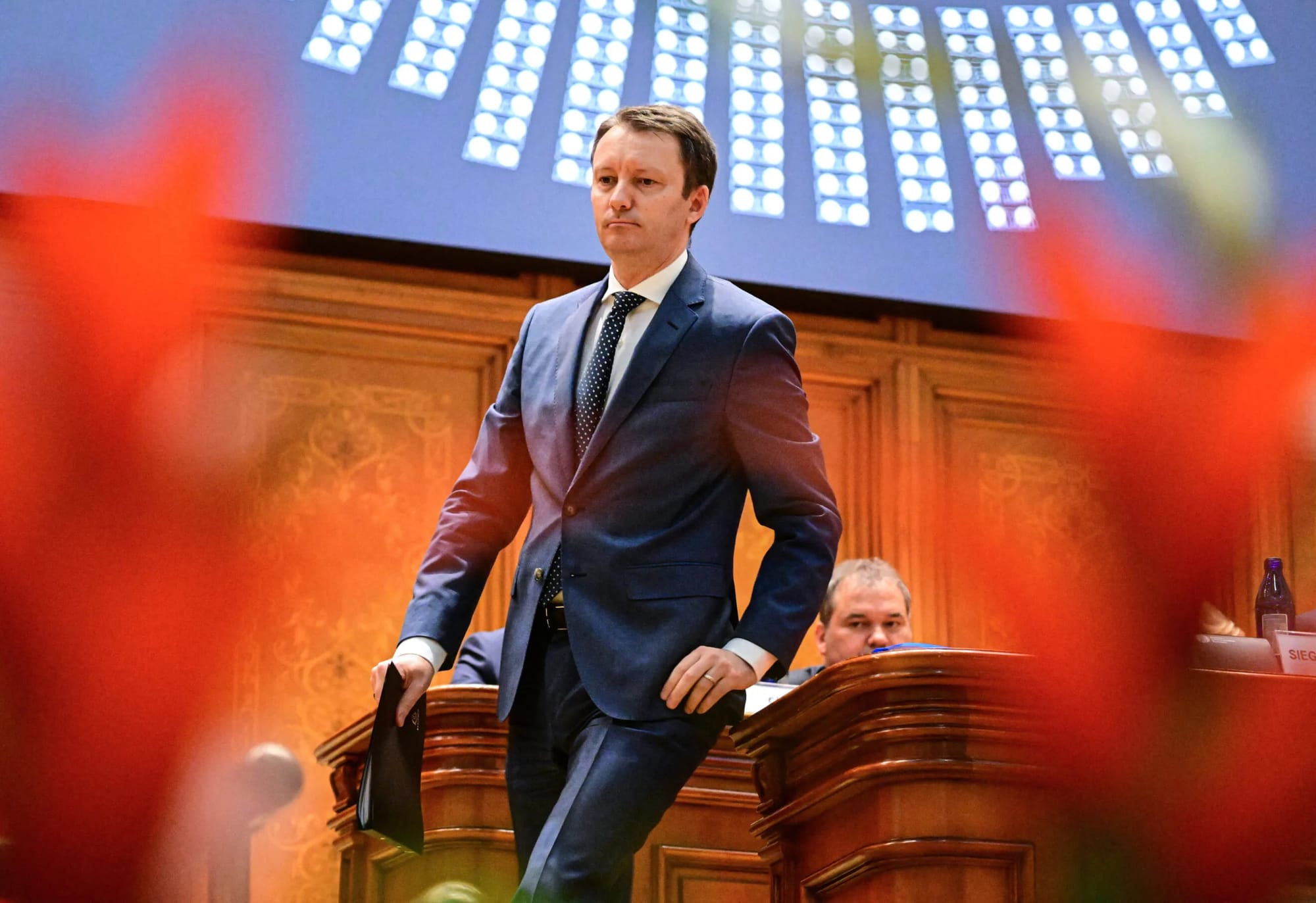
The political deadlock is adding to pressure on Romanian assets and public finances. The leu has fallen to record lows and local 10-year bond yields have risen 60–80 basis points over the past two weeks, Reuters reports. Credit rating firm S&P, which rates Romania BBB-, was due to review the country’s rating on Friday.
Latin America
Panama’s borrowing costs ease as investor optimism grows
Panama’s borrowing costs have reduced over the past two years as investors look past the financial shock from the 2023 closure of the giant Cobré Panama copper mine and a 2024 threat by then-US-president elect Donald Trump to take control of the Panama Canal, the FT reports.
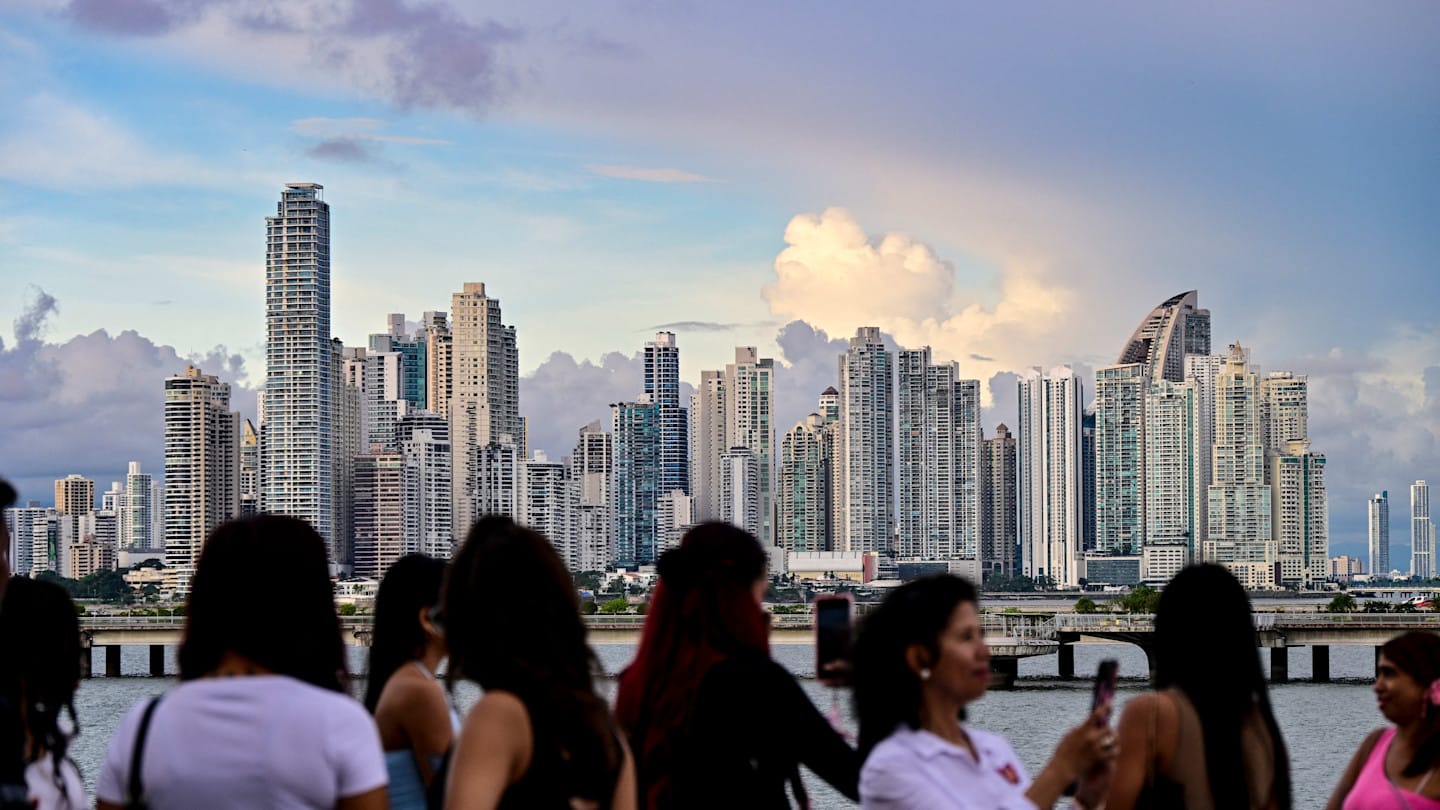
The premium over US Treasuries that Panama pays to issue debt has fallen from as much as 350 basis points in 2023 and 2024 to about 150bp. The country’s finance minister Felipe Chapman said Panama paid a 145bp premium rather than the 160bp he had expected during a recent bond issue.
- Chile copper production sinks to lowest in more than 15 years (Bloomberg)
As optimism grows that the mine could reopen—in part based on a government report recommending formal talks with the mine’s owner First Quantum—investors are also cheering a strengthening of Panama’s finances. The administration of President José Raúl Mulino has cut the fiscal deficit from more than 6% of GDP in 2024 to 3.7% last year, while the economy grew 6.4% year-on-year in the second quarter.
Colombia considers IMF funding as fiscal problems mount
Colombia is in talks with the IMF over possible financing, Reuters reports. The finance ministry said the multilateral would review the government’s fiscal plan and economic outlook as a first step toward deeper cooperation.
Colombia’s new government, under recently elected President Abelardo De La Espriella, expects a larger budget deficit this year and an even wider one in 2027. It plans to increase borrowing by more than $10.5 billion this year and expects next year’s borrowing to reach $71.7 billion—more than twice the original plan—as lower tax revenue, higher spending and persistent inflation strain public finances.
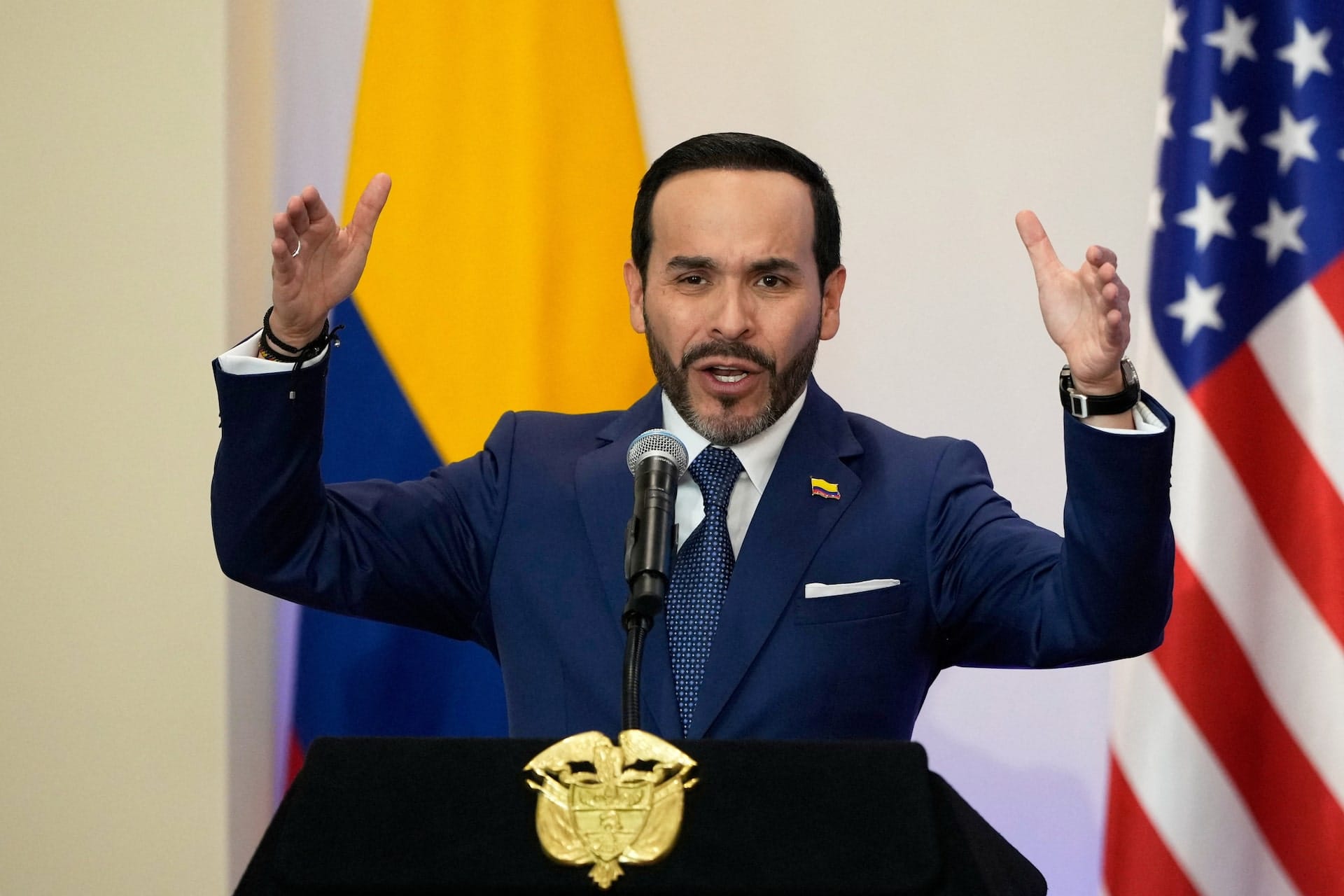
The central bank on Wednesday raised its policy rate by a quarter percentage point to 12.25%, its highest since 2024. Inflation reached 6.24% in August and is expected to remain above the bank’s 2% to 4% target range this year and next.
China and Russia make inroads in Nicaragua
Nicaragua has awarded 80 mining concessions to 16 Chinese companies since 2023, covering 1.4 million hectares, or 11%, of the country, according to an FT analysis of government data. The licenses, which cover exploration and development rather than a single mineral, have gone to Chinese firms more often than to all other miners combined.
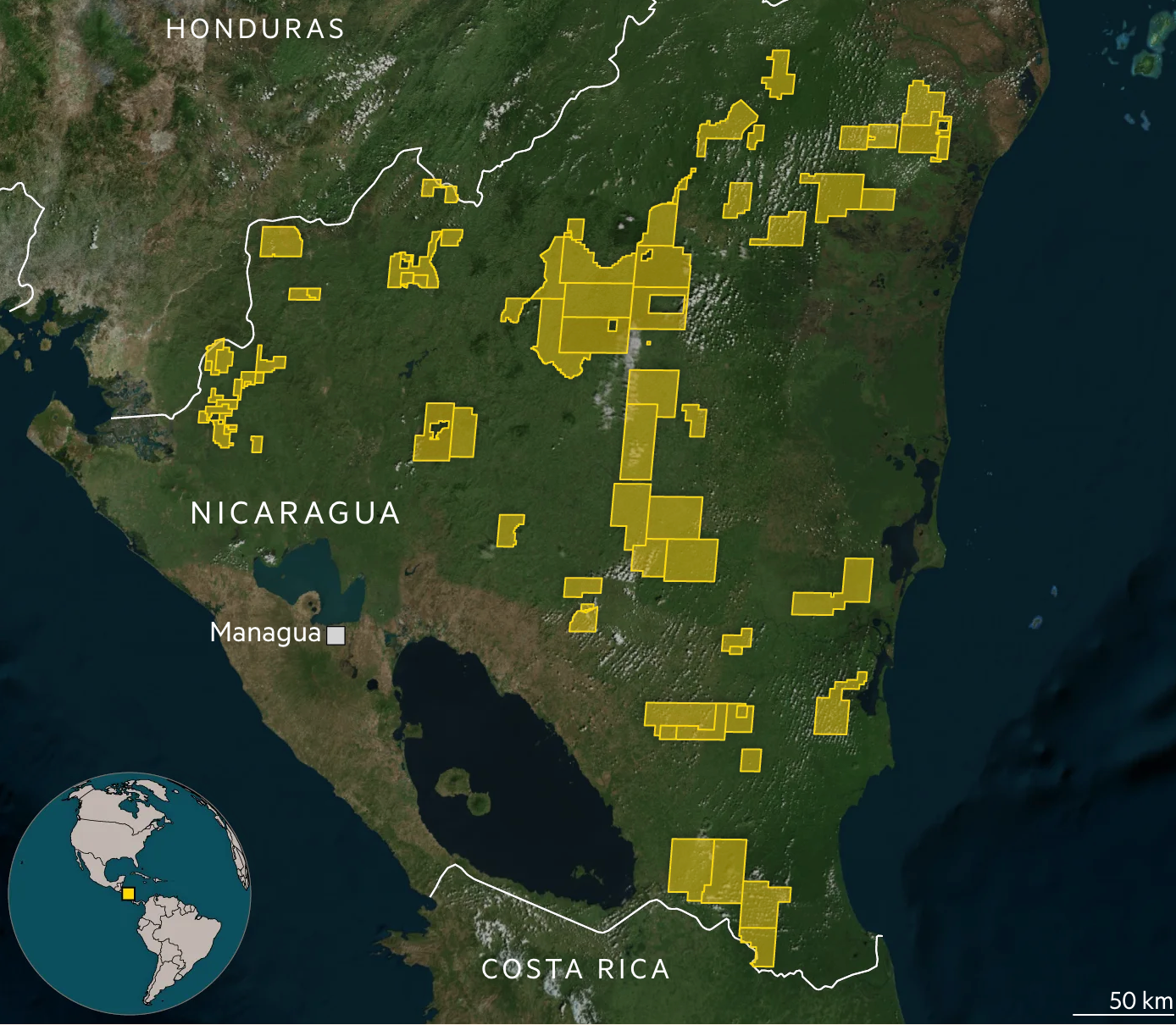
Chinese financing has also moved into the country’s infrastructure, energy, telecoms, airport and port projects since Managua restored ties with Beijing in 2021. The mining awards give China a larger stake in an economy where US sanctions have cut the government off from much of the traditional multilateral financing system.
Meanwhile, Russia is expanding its presence in the country’s information space. RT en Español began broadcasting free-to-air in September, with national coverage planned in coming months under an agreement signed last year by President Daniel Ortega’s son. China’s CGTN had sent a Spanish-language delegation to Nicaragua days earlier, bringing Beijing and Moscow closer to a media system in which independent outlets have been largely closed, confiscated, or driven into exile.
What We’re Reading
Côte d’Ivoire clamps down on illegal gold rush (Barron’s)
Zambia in talks with IMF over new support program (Reuters)
Zambia inks $2.14bn deals in UAE (Times of Zambia)
Ethiopia fighting escalates, killing 52 civilians (BBC)
DRC tightens mining rules to promote local involvement (Reuters)
Vietnam shares fall in wake of market upgrade (VietNam News)
Vietnam and Panama to be removed from EU’s tax haven blacklist (Bloomberg)
Kazakh president visits Germany (Astana Times)
Oman to invest in doubling oil storage capacity (Bloomberg)
Iraq deepens October oil export discount to $37 (Bloomberg)
US formally completes withdrawal of troops from Iraq (The Guardian)
IMF and Lebanon hold more talks on new lending program (Reuters)
Russia ‘behind arson attack’ on Estonian defense company (FT)
El Salvador’s Bukele turns to stablecoins as bitcoin payments fail to catch on (Bloomberg)
Chile’s Kast unveils $1.3bn plan to create 100,000 jobs (Reuters)
Argentina shuns meat as purchasing plummets under Milei (France24)
Falkland islanders grapple with Argentina’s ‘economic warfare’ (FT)
We are committed to providing FMN readers with a free weekly digest of politically unbiased, succinct and clear news and information from frontier and small emerging markets.
Please consider becoming a paid supporter to help cover some of our costs and support our continued development of sharp markets-focused coverage and new informational products. Paid subscribers will also gain exclusive access to our EM/FM reports that aggregate insights from dozens of major banks, international institutions and consultancies.

Read next


