

🌏 Frontier Markets News, July 3rd, 2026
A weekly review of key news from global growth markets

Africa
Tanzania courts Dangote billions while its grid falters
Tanzania suffered a nationwide power blackout on Saturday after a number of faults tripped a national grid protection system, The Chanzo Initiative reports. Power was restored by midnight but the blackout stranded rail passengers and disrupted hospitals, prompting a government probe and renewed scrutiny of aging infrastructure.
Africa’s richest man, Aliko Dangote, this week promised to help Tanzania upgrade its power infrastructure as part of a package of investments agreed with the country’s President Samia Suluhu Hassan.
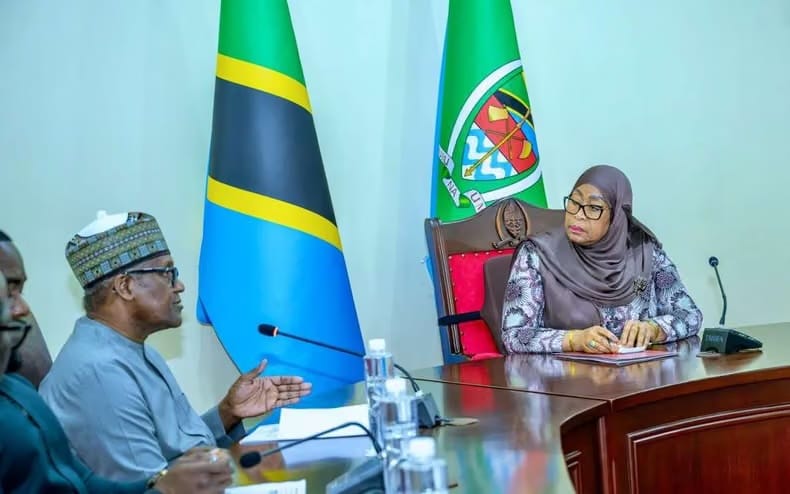
The project pipeline includes a 2,000-megawatt coal-fired power station, a new seaport with a 40-kilometer access road, a urea fertilizer complex, a special trade zone, and an 812-kilometer transport corridor linking Mtwara to Mbamba Bay.
Samia has tapped her planning minister to fast-track negotiations, and a Tanzanian delegation will head to Nigeria in coming weeks.
Ethiopia clinches bondholder deal
Ethiopia struck a preliminary deal this week with a committee representing roughly 45% of its $1 billion defaulted Eurobond, Reuters reports. The deal could become the final stage of a debt saga stretching back to 2021, when Addis Ababa first sought relief under the G20’s “Common Framework.”
- Ethiopia wins fresh IMF cash (Ecofin)
The country defaulted on the bond in December 2023. The new $880 million bond, which effectively gives investors a 12% haircut, will carry a 6.15% coupon and amortize in installments from July 2026 through July 2029. Addis Ababa will also clear $99.4 million in missed coupon payments and a 0.5% consent fee.
The IMF has signed off on the structure as consistent with the country’s debt targets. Following the announcement of the deal, the creditor committee said the process exposed “broad flaws” in the Common Framework for restructuring.
Vodacom lifts Safaricom stake to 55% in $2.1bn deal
Vodacom Group completed its acquisition of an additional 20% of Safaricom on Tuesday, taking its holding to roughly 55% and giving it majority control of Kenya’s most valuable listed company, Zawya reports. The $2.1 billion deal, first announced in December, saw Vodacom buy a 15% stake from the Kenyan government and a further 5% from Vodafone at KES34 ($0.26) per share.
- Visa and M-Pesa test stablecoins in DRC for cross-border payments (The East African)
Nairobi retains 20%, with the rest trading on the Nairobi Securities Exchange.
The acquisition gives Vodacom full control of Safaricom, whose M-Pesa platform generates 44% of its Kenyan revenue, and which counts about 14 million customers in Ethiopia. Safaricom’s results will now flow directly onto Vodacom’s books rather than being treated as an associate.
Asia
Kazakhstan to hold snap elections next month
Kazakhstan President Kassym-Jomart Tokayev signed a decree on Wednesday that called for national elections in August. The elections are required by Kazakhstan’s new constitution, which took effect this week.
The constitution consolidates Kazakhstan’s parliament into one chamber from the current two and creates a new role of vice president. Tokayev told parliament on Tuesday that he intends to “carry out a major overhaul of the foundation of Kazakh statehood,” Reuters reports.
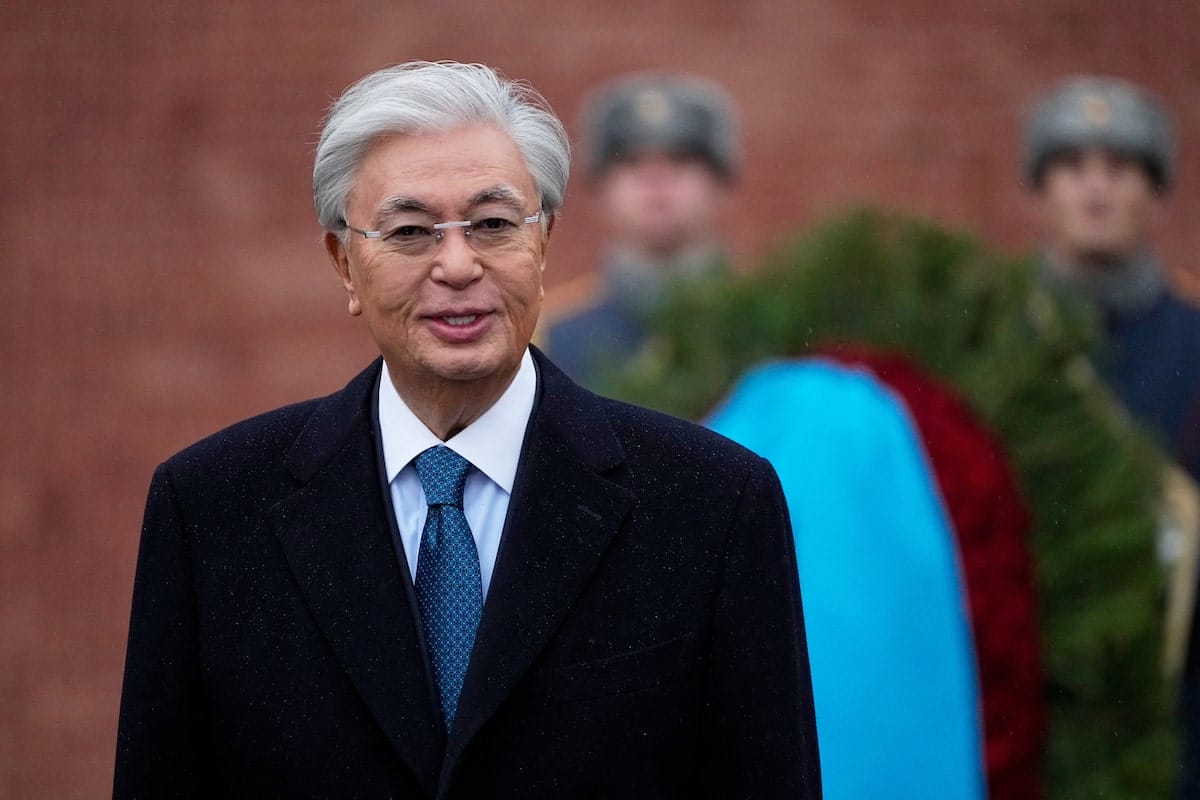
Tokayev took power in 2019 as the hand-picked successor to Nursultan Nazarbayev, a dictator who ruled for 30 years. But Tokayev broke with Nazarbayev in 2022 after hundreds of people died in nationwide protests. Tokayev called the protests a coup attempt backed by Nazarbayev.
Tokayev has since moved Kazakhstan closer to the West as he seeks to translate the country’s abundance of minerals into foreign investment. His term in office is set to end in 2029.
Indonesia imprisons prominent tech founder for corruption
An Indonesian court this week sentenced tech founder and former government official Nadiem Makarim to a decade in prison after finding him guilty of abusing his power and causing losses to the state, the New York Times reports.
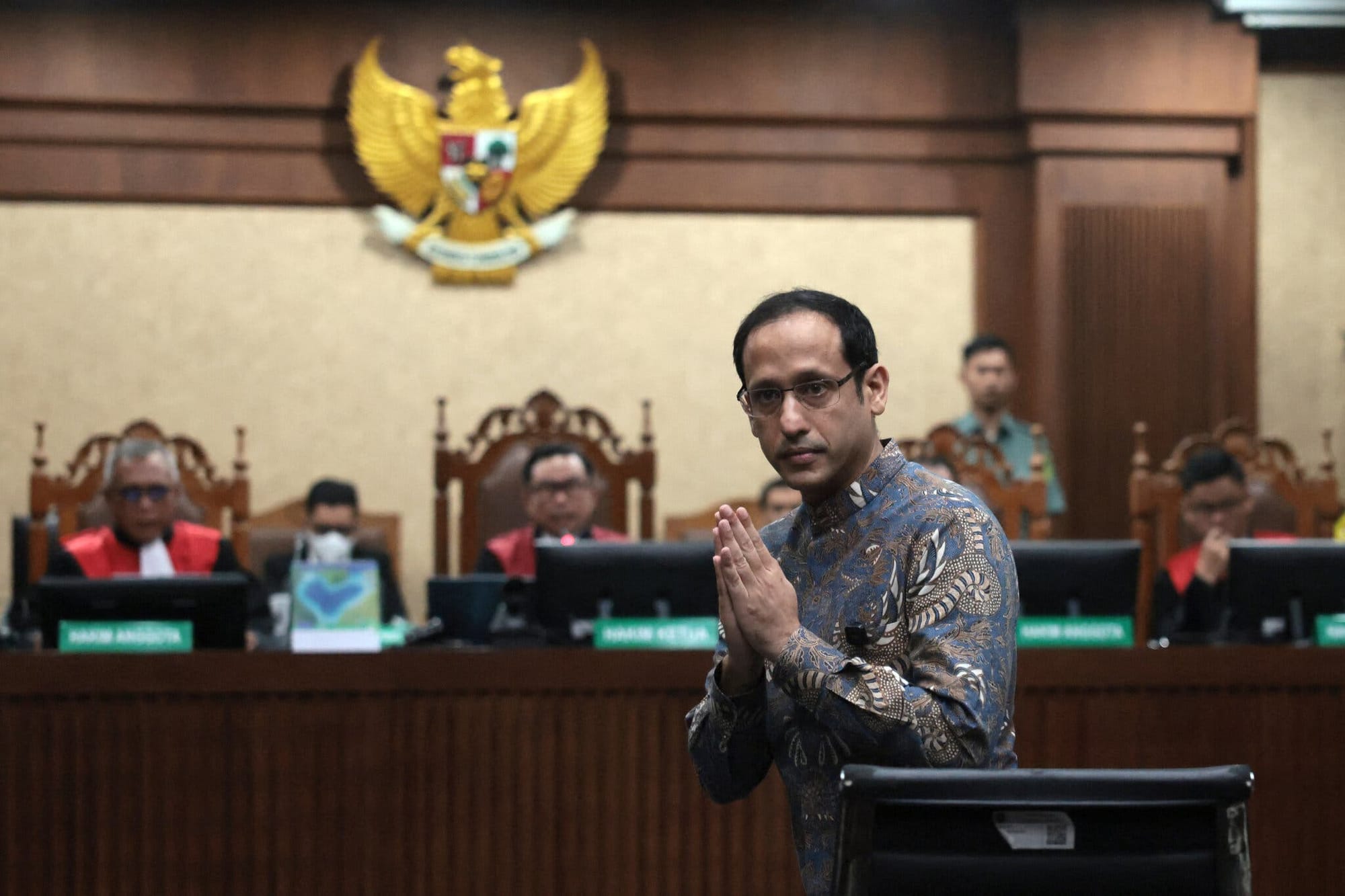
Makarim, who co-founded ride-sharing app Gojek, was convicted of corruption in a decision he made as education minister to award Google a contract to supply the country with computers during the Covid-19 pandemic. Prosecutors alleged that Makarim had personally made $85 million from the deal and that he had awarded Google the contract because it invested in Gojek.
Critics of the decision argue that Indonesia’s leader, Prabowo Subianto, is using the guise of anti-corruption measures to fund government expenditures as Indonesia’s economy slumps. Even though the court found Makarim not guilty on the charge of personal enrichment, it still ordered him to pay $45 million in restitution.
Middle East
Oman IPO highlights investor confidence
Investors this week warmly welcomed Oman’s first IPO of the year, AGBI reports. The share sale by The Oman India Fertilizer Company (Omifco) was 18-times oversubscribed, attracting $12.2 billion in investor orders—the highest-ever demand generated by any IPO in Oman.

The strength of the offering signals growing investor confidence in the unique resilience of Oman’s economy during the US-Iran War, which has generated a macroeconomic and corporate sector windfall as others in the region suffered losses.
- Oman to shield consumers by subsidizing food imports (AGBI)
- Oman unveils $250mn real estate development fund (Arab News)
Oman this week reported 2.6% real GDP growth in the first quarter of this year, supported by a 4.59% rise in the oil sector and a 9.61% rise in the financial sector. The logistics sector grew 3.11% as Oman experienced a sharp rise in trade flows due to its geographic advantage as an alternative route to the blockaded Strait of Hormuz.
Iraq moves against pro-Iran groups
Iraq’s newly elected Prime Minister Ali al-Zaidi launched a major anti-corruption crackdown this week, arresting 47 suspects including members of parliament and government officials in what the government describes as a “central pillar” of its effort to strengthen state institutions and protect public funds, Reuters reports. The dragnet has captured officials sanctioned by the US for using Iraqi state funds to support Iranian militias and sanctions evasion measures, suggesting that the new PM seeks stronger Iraq-US cooperation.
- Iraq to invite Gulf investors into Energy and Development Fund (Zawya)
In parallel with the crackdown, Iraq’s government has set a deadline for a list of designated pro-Iran militias to disarm, stating that “all weapons outside the state framework will be subject to legal redress” by the end of September—a date that coincides with the expected end of a US-led military mission tackling jihadists.
Authorities said all militias, including the Popular Mobilization Forces, must either disarm or seek full integration with official government forces. The US has in turn resumed shipments of dollars linked to Iraqi oil revenues that had been halted in an attempt to pressure the Iraqi government to take a more aggressive stance against Iranian influence.
Europe
Hungary’s Orbán ‘masked a deficit twice the declared size’
Hungary’s Prime Minister Péter Magyar this week accused the government of his predecessor Viktor Orbán of hiding a 2026 budget deficit that would have topped 8% of GDP, more than double the publicly declared target of 3.7%. Orbán’s officials privately assumed a 6.8% shortfall against public targets of 3.7% and later 5%, the FT reports.
- Péter Magyar is trying to fire up Hungarian democracy (The Economist)
Magyar’s finance minister András Kármán will present a revised budget by the end of August.
Markets have cheered Magyar since his April win—the forint is up roughly 15% against the euro—but a deficit above 7% would make qualifying for euro adoption, which requires a shortfall under 3%, harder to achieve.
Kyiv seeks to turn seized cybercrime crypto into war financing
Ukraine plans to convert more than $8.3 million in cryptocurrency seized from an alleged cybercrime group into government war bonds—the first time it has channeled confiscated digital assets into the war effort, the Record reports.
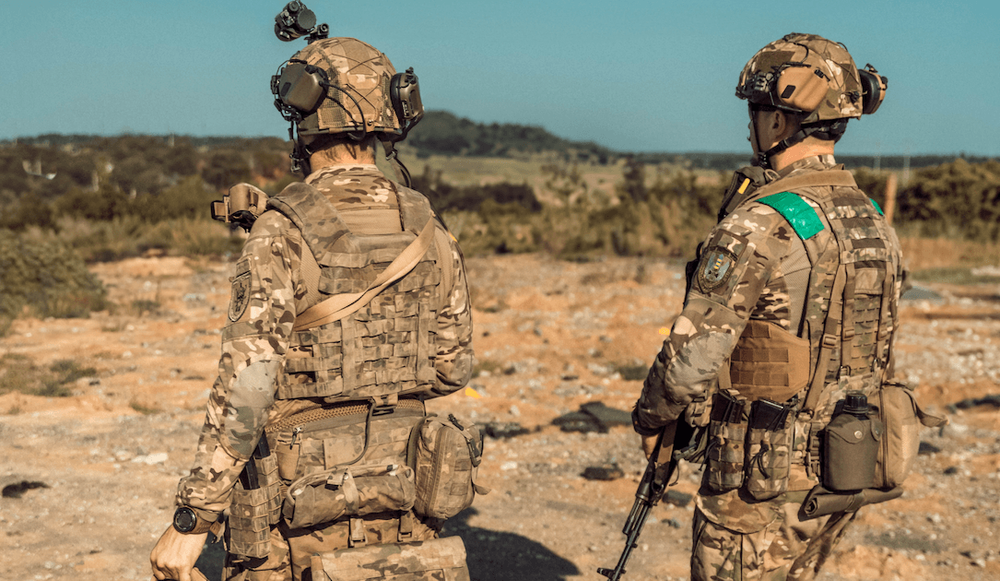
The confiscated cryptocurrency, which came from an undisclosed group accused of ransomware attacks across Europe and the US that caused over $100 million in losses, was transferred to state asset-recovery agency ARMA under a court order. Once converted to hryvnia, the proceeds will fund defense spending.
While the $8.3 million to be converted is a modest sum, it represents a template for handling seized crypto as a state-held asset in one of the world’s most active crypto markets.
Tensions escalate between Albanian protesters and the government
Anti-corruption demonstrations in Albania, sparked by a multibillion-dollar development on protected coastland backed by US President Donald Trump’s daughter Ivanka and son-in-law Jared Kushner, turned violent this week after police fired water cannons and pepper-sprayed the protesters, Euronews reports. Earlier in the week, demonstrators threw eggs at lawmakers’ cars, prompting six arrests.

Albanians have been protesting for 33 consecutive days and this week, the country’s Prime Minister Edi Rama changed his position on the demonstrations, describing current unrest as “democracy in action.” His earlier, more combative response had stirred unease within his own Socialist Party and in Brussels.
Although the preparatory work for the Kushners’ proposed resort has been suspended, locals and environmentalists say significant damage to the formerly protected area has already occurred.
Latin America
Fujimori declared winner in Peruvian elections
Peru’s electoral authorities declared Keiko Fujimori the winner of the country’s closest presidential race in decades, DW reports. Her win, by a margin of fewer than 50,000 votes out of 18.4 million cast, was confirmed after three weeks of contested ballot reviews.

Fujimori, 51, will take office on July 28 for a five-year term, inheriting a country that has cycled through eight presidents in a decade and where rising crime dominated the campaign. Her platform centers on a security crackdown modeled on El Salvador’s Bukele approach, a resumption of aerial coca fumigation halted under her predecessor, and a broadly pro-market economic posture that analysts expect to be more welcoming to mining investment than the outgoing government.
The New York Times reports that her narrow mandate and a divided congress are likely to limit her room to maneuver. Her defeated rival, leftist senator Roberto Sanchez, has refused to recognize the outcome, alleging electoral irregularities, although the National Electoral Jury is scheduled to formally certify the result on July 3.
Dominican Republic outperforms South American neighbors
The Dominican Republic’s economy continues to be one of the strongest in the region, notching up an average GDP growth rate of 4.2% for the first five months of the year, according to the country’s central bank.
The Caribbean nation’s acceleration contrasts sharply with deepening economic slowdowns in the Southern Cone. Argentina’s annualized economic growth declined sharply in April, missing analyst forecasts. The country’s official statistical agency said activity had contracted 1.5% on a month-on-month basis, raising questions about the sustainability of the economic recovery under President Javier Milei’s austerity program.
Neighboring Chile also reported weaker-than-expected data, with economic activity contracting 0.9%. The reading missed market forecasts and adds to a string of weak indicators that have prompted multiple growth downgrades for the Andean nation, Bloomberg reports.
Bolivia floats currency in bid for IMF stabilization deal
Bolivia’s government adopted a flexible exchange-rate system on June 26, ending a 15-year peg that had held the boliviano at 6.96 to the US dollar. The new rate opened at 9.73 per dollar on June 29, representing a devaluation of roughly 40%.
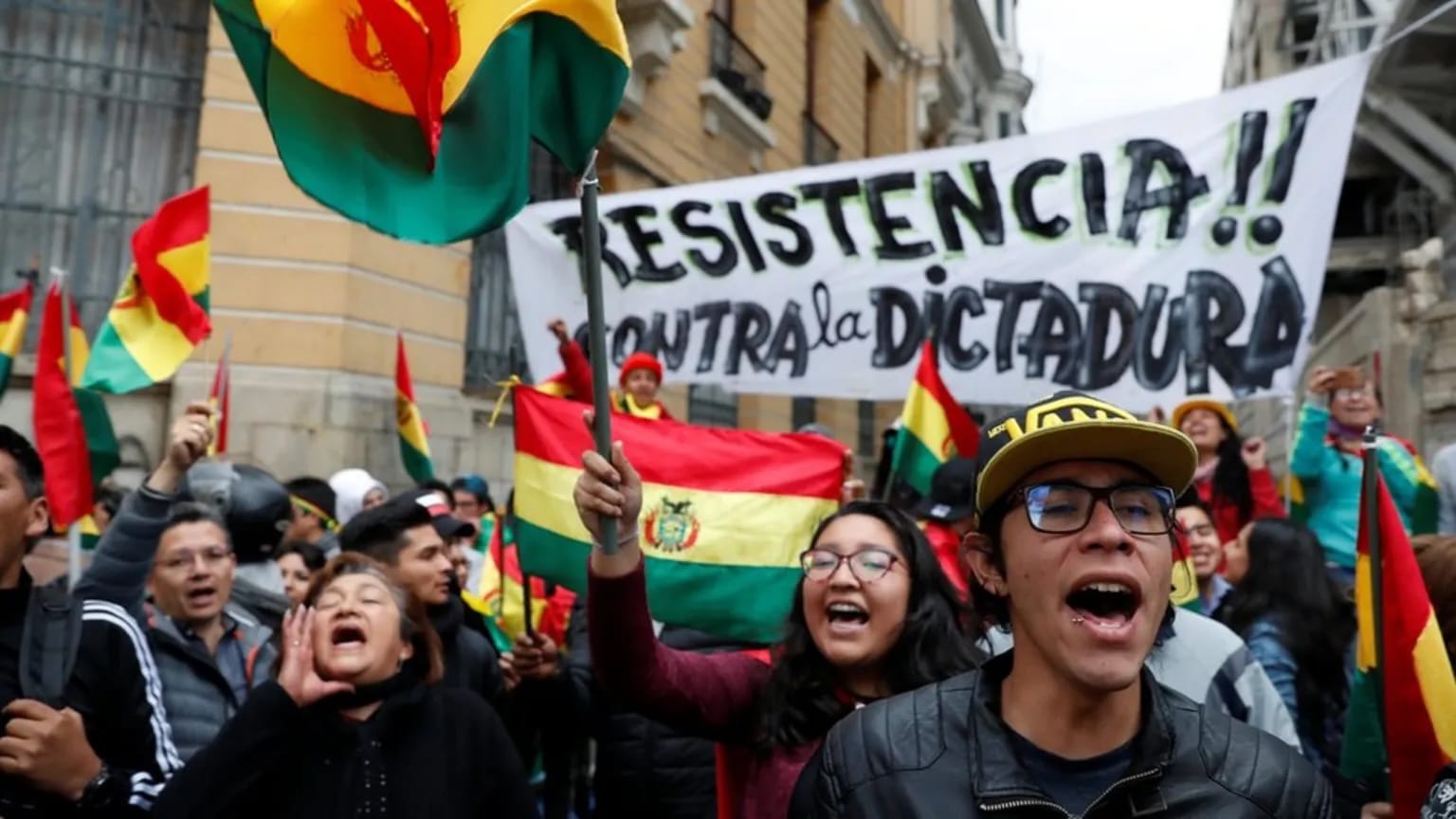
The policy shift follows two months of public protests that paralyzed the country and cost the economy an estimated $2.5 billion, according to the national industry chamber. President Rodrigo Paz, who took office in November pledging to stabilize the economy and steer Bolivia back toward global markets, moved quickly once the blockades were lifted, cutting fuel subsidies and selling the country’s first international bond in years before announcing the float.
The IMF called the move an important step toward restoring macroeconomic stability, and economy minister Jose Gabriel Espinoza confirmed that the government was discussing a potential $5 billion support package with the multilateral.
What We’re Reading
Nigerian government announces significant new mineral discoveries (Premium Times)
Nigeria’s biggest refinery imports UAE crude for the first time (Reuters)
Nickel: The metal moving up behind gold in Côte d’Ivoire (Ecofin)
DRC orders cobalt miners to give up unused export quotas (Bloomberg)
IMF says DRC economy is ‘resilient’ (IMF)
Zimbabwe: Who benefits from Mnangagwa’s term extension? (Africa Report)
Egypt issues $500mn yen-denominated sustainability samurai bonds (Ahram Online)
Myanmar to resume China-backed $3.6bn dam project (Reuters)
Myanmar president visits Laos in first visit to ASEAN partner (Reuters)
Bangladesh’s exiled PM vows to return (NDTV)
Pakistan-Afghanistan conflict intensifies (BBC)
Georgia to boost business ties with Uzbekistan (Caspian Post)
Lebanon and Israel sign 14-point framework agreement (L’Orient Today)
First Syrian Parliament since al-Assad’s ousting begins legislative duties (Al-Jazeera)
Saudi Public Investment Fund’s profits soar 152% to $17.33 billion in 2025 (Zawya)
How to win friends in the Caucasus (Economist)
El Salvador's Bukele seeks party nod for third term after constitutional change (Reuters)
BHP leverages $1.5bn to restart Chile copper mine (Northern Miner)
Venezuela’s 'completely ineffective' government worsens earthquake disaster (PBS)
Ecuador’s shrimp exports hit all-time record (Seafood Source)
We are committed to providing FMN readers with a free weekly digest of politically unbiased, succinct and clear news and information from frontier and small emerging markets.
Please consider becoming a paid supporter to help cover some of our costs and support our continued development of sharp markets-focused coverage and new informational products. Paid subscribers will also gain exclusive access to our EM/FM reports that aggregate insights from dozens of major banks, international institutions and consultancies.

Read next


